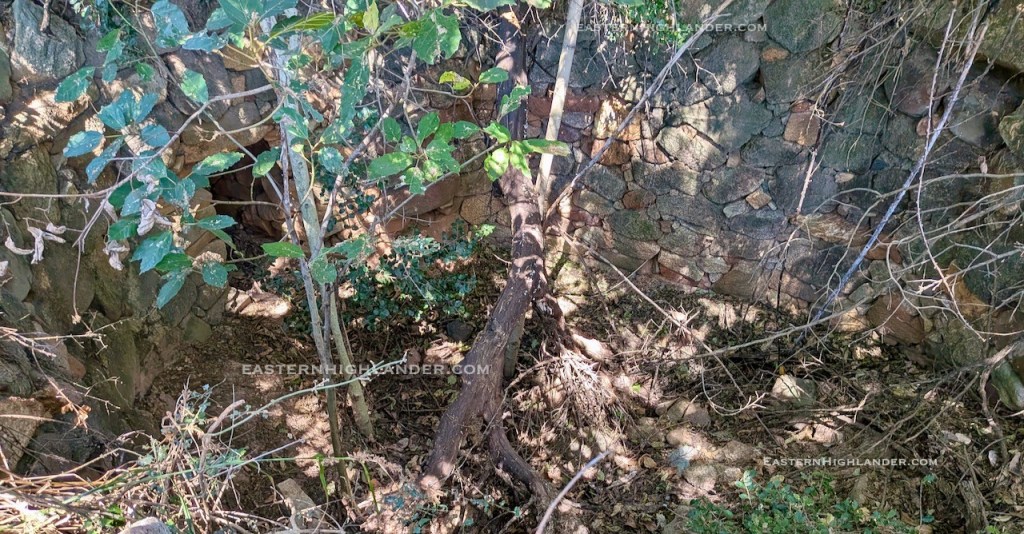
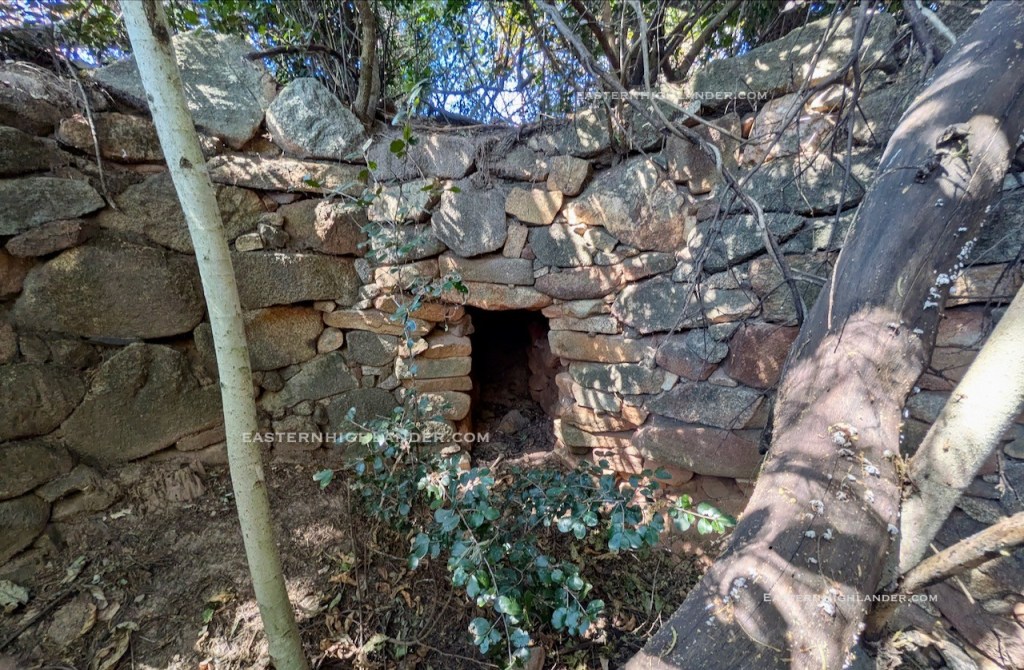
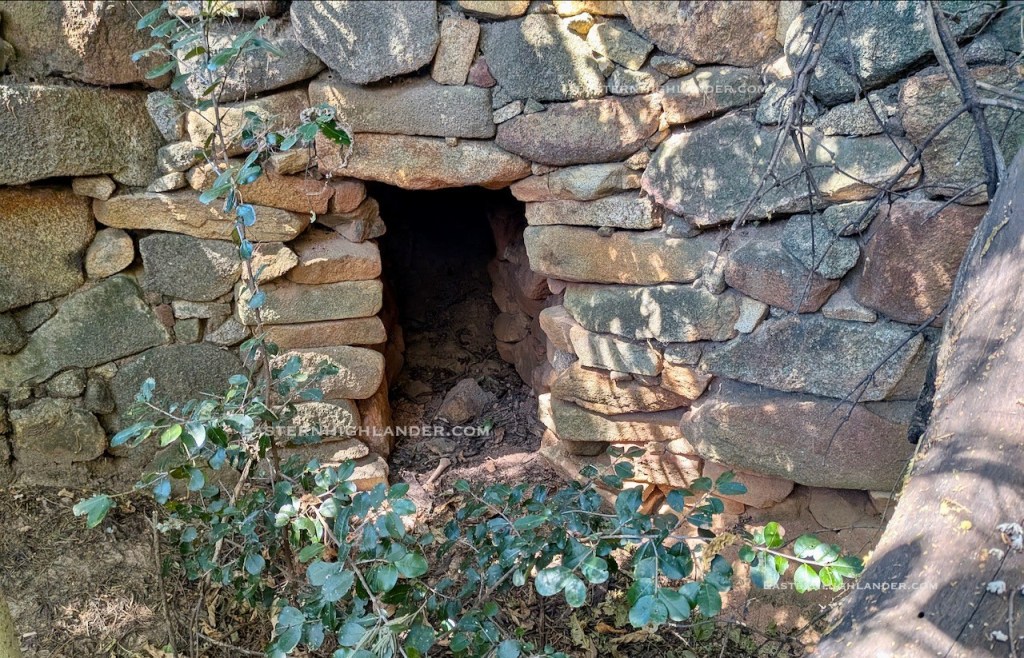
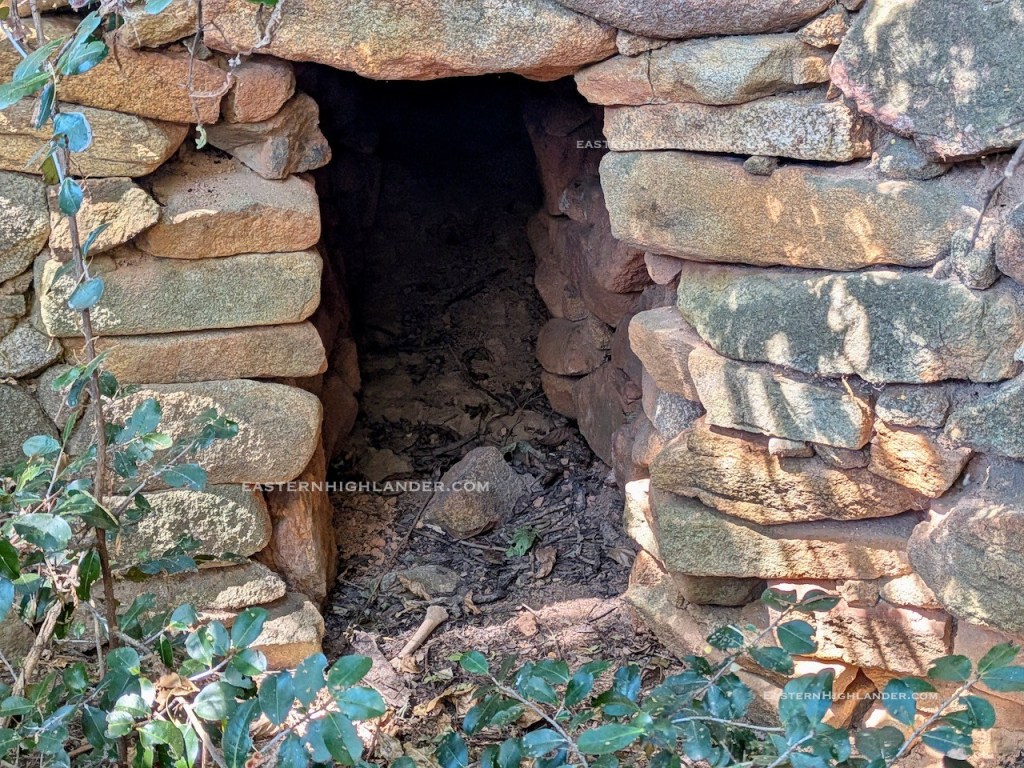
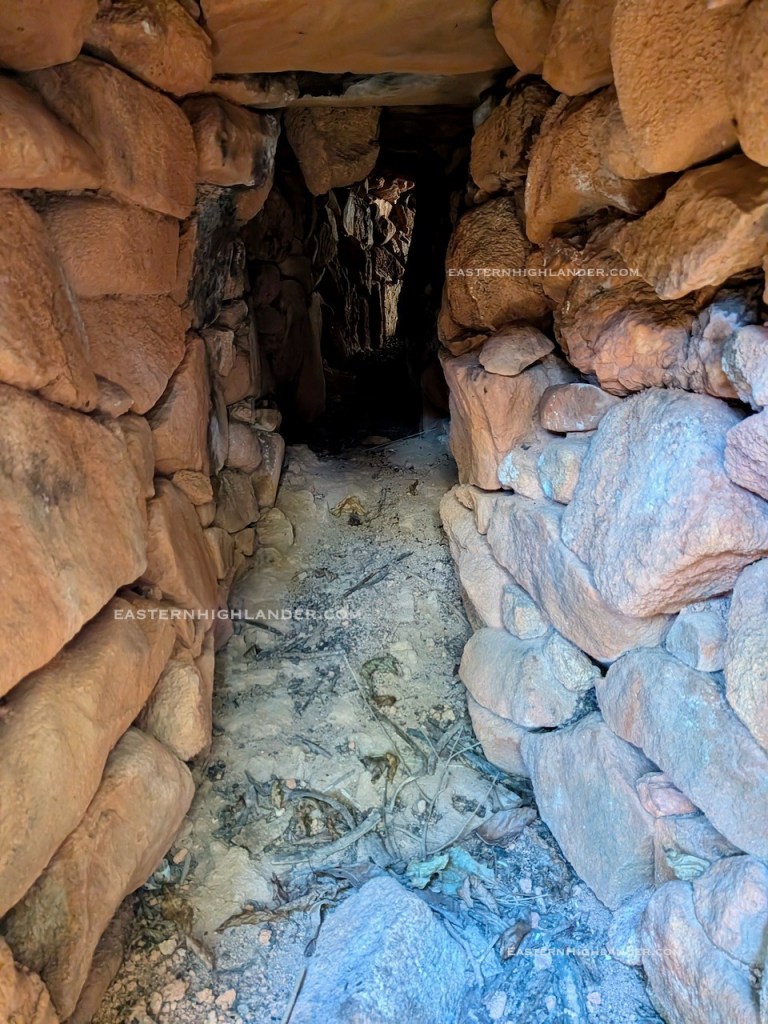
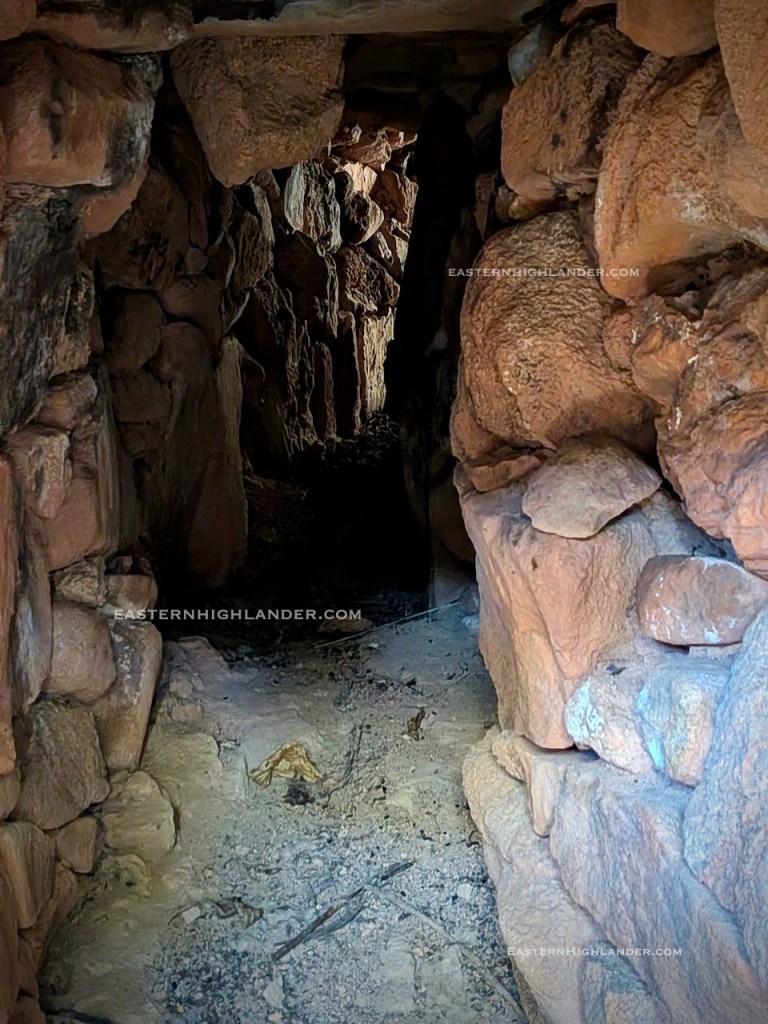
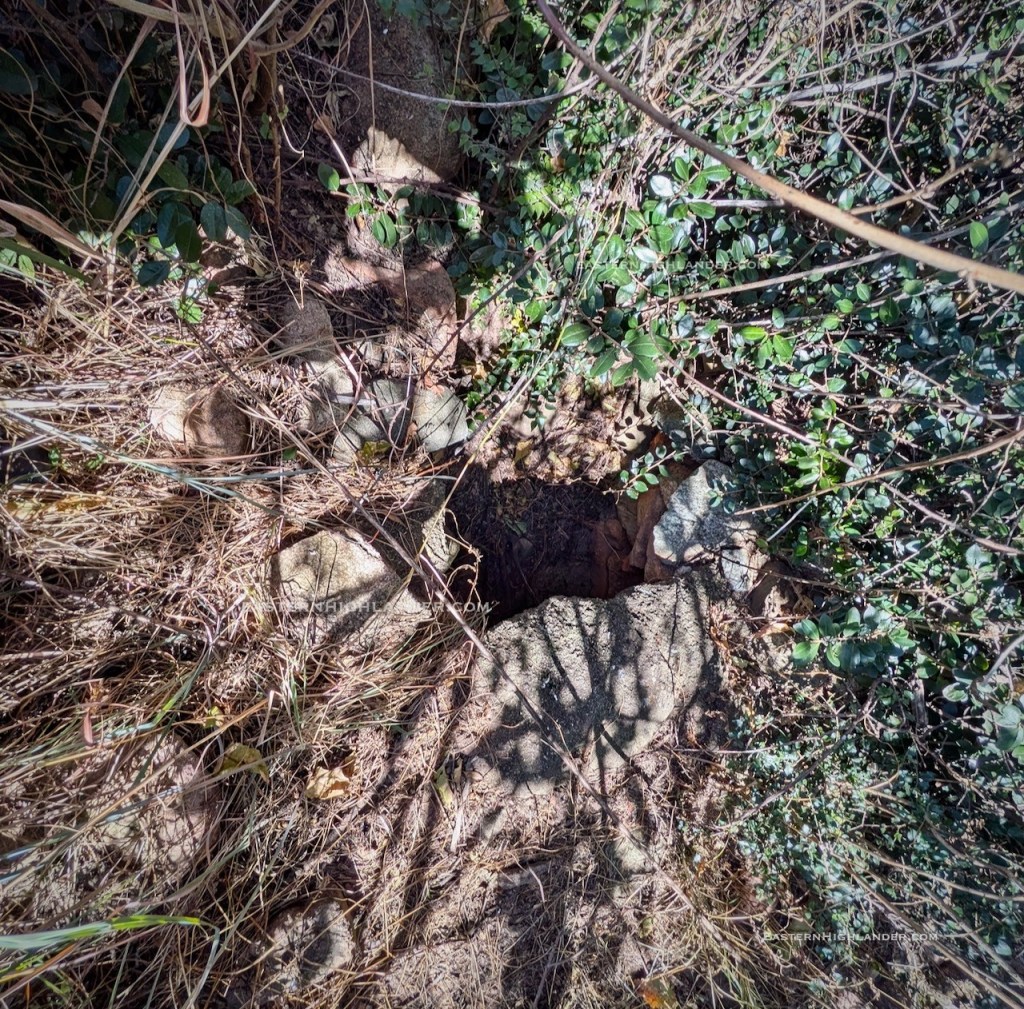
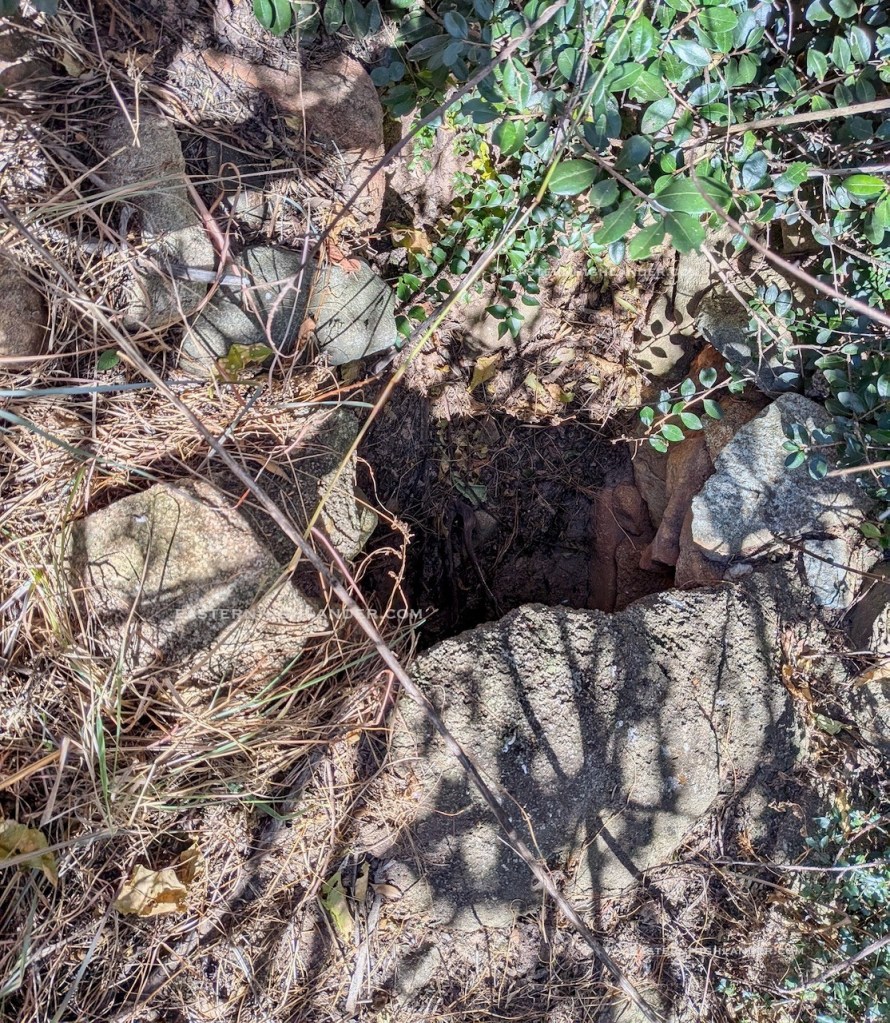
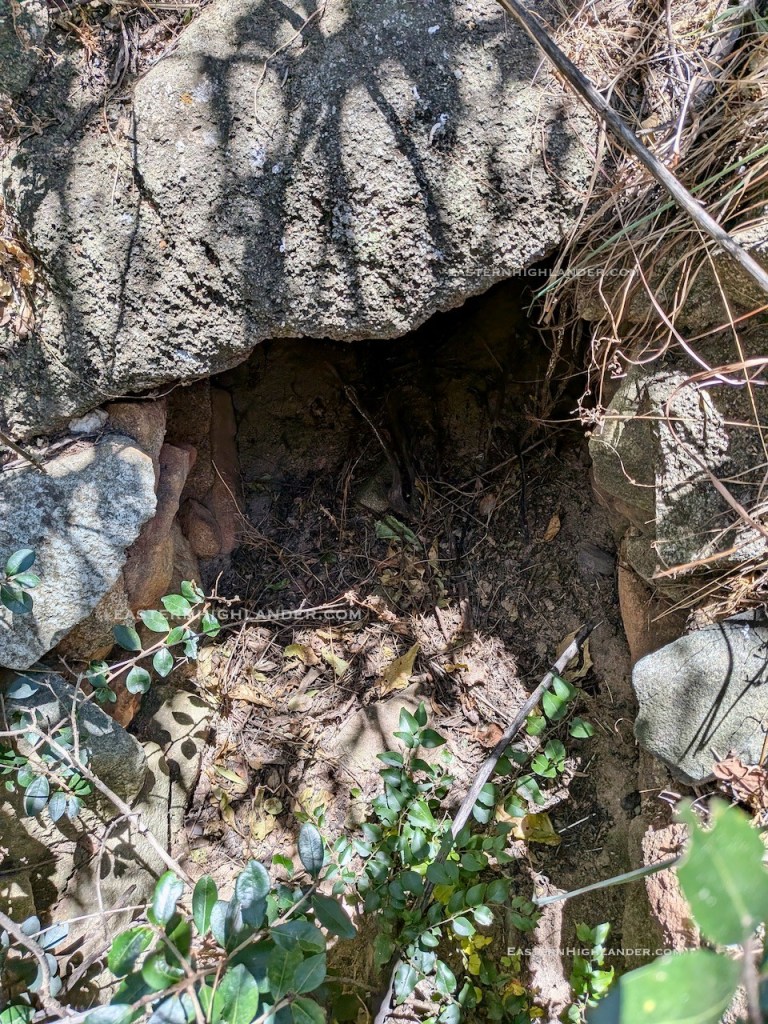
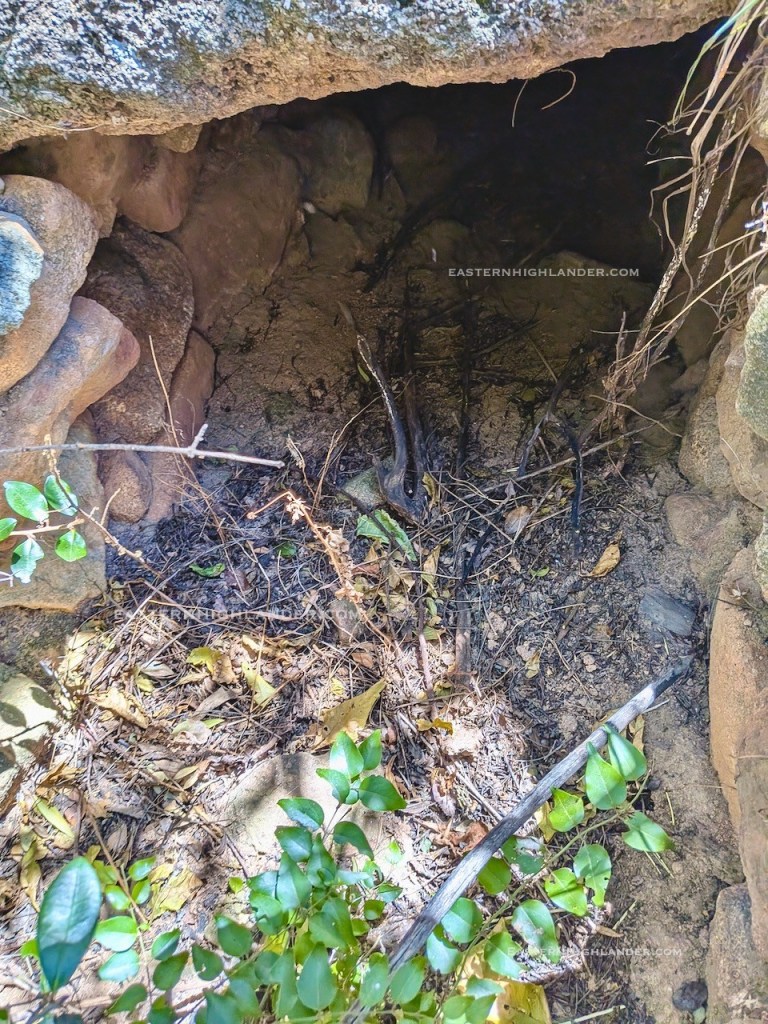
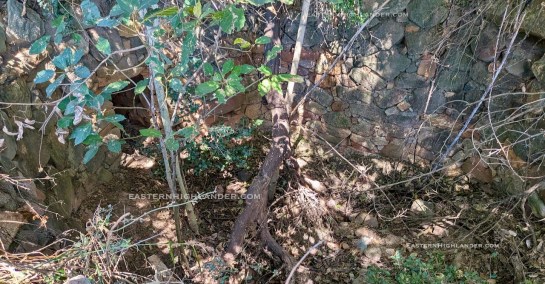
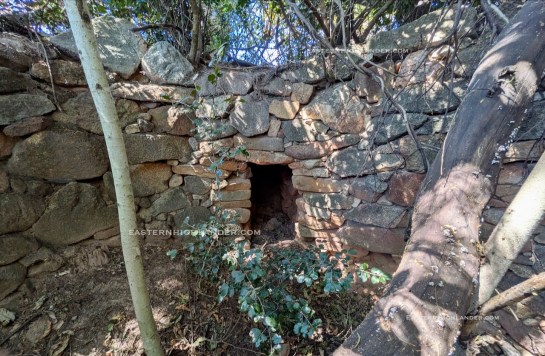
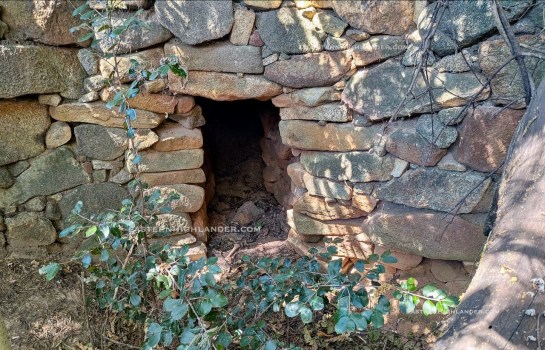
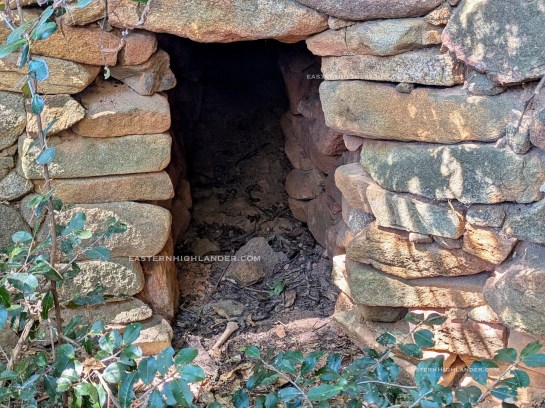
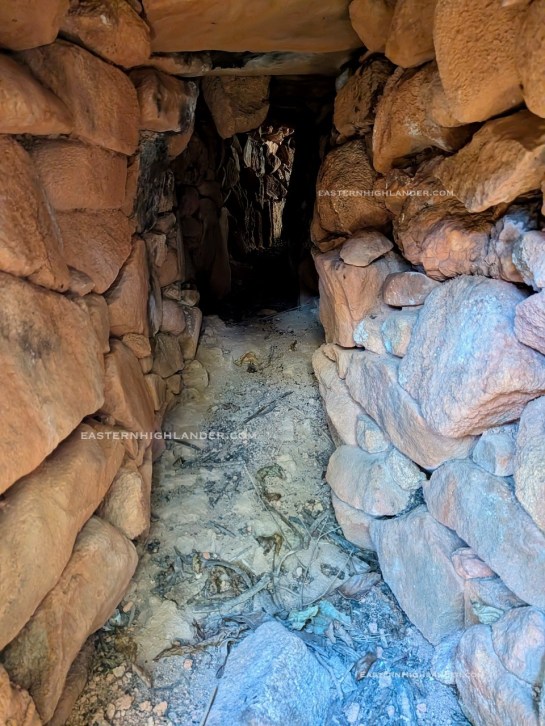
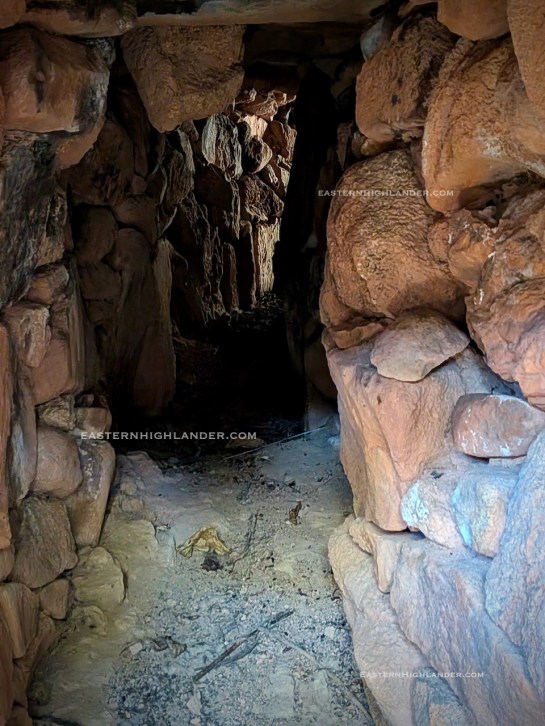
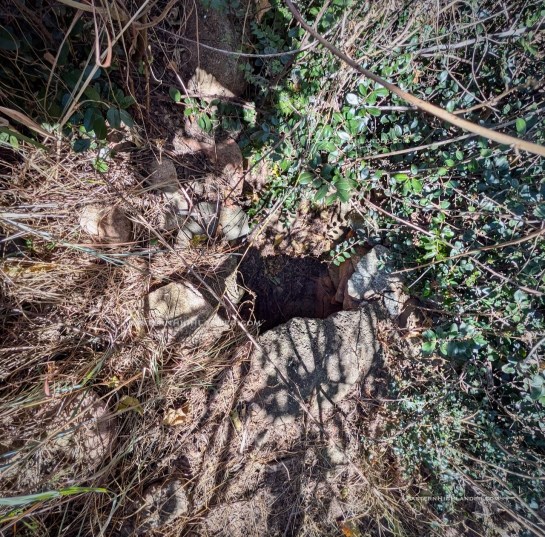
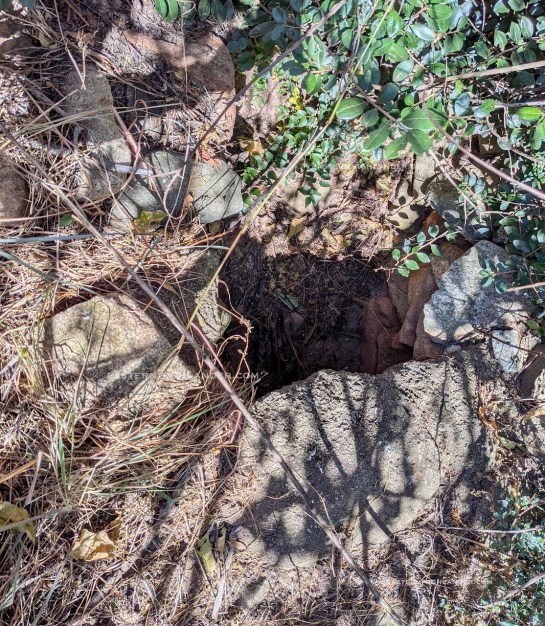
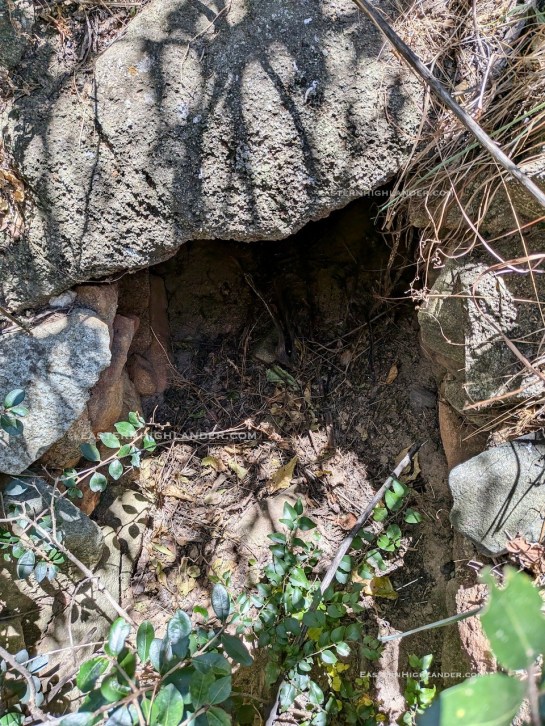
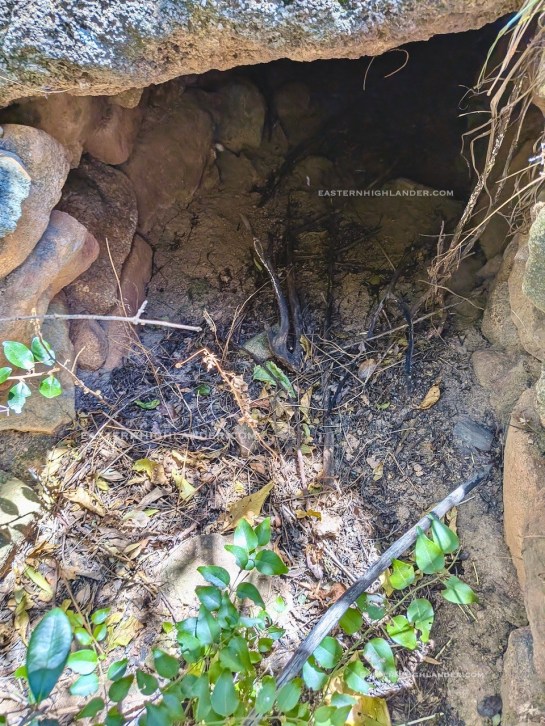
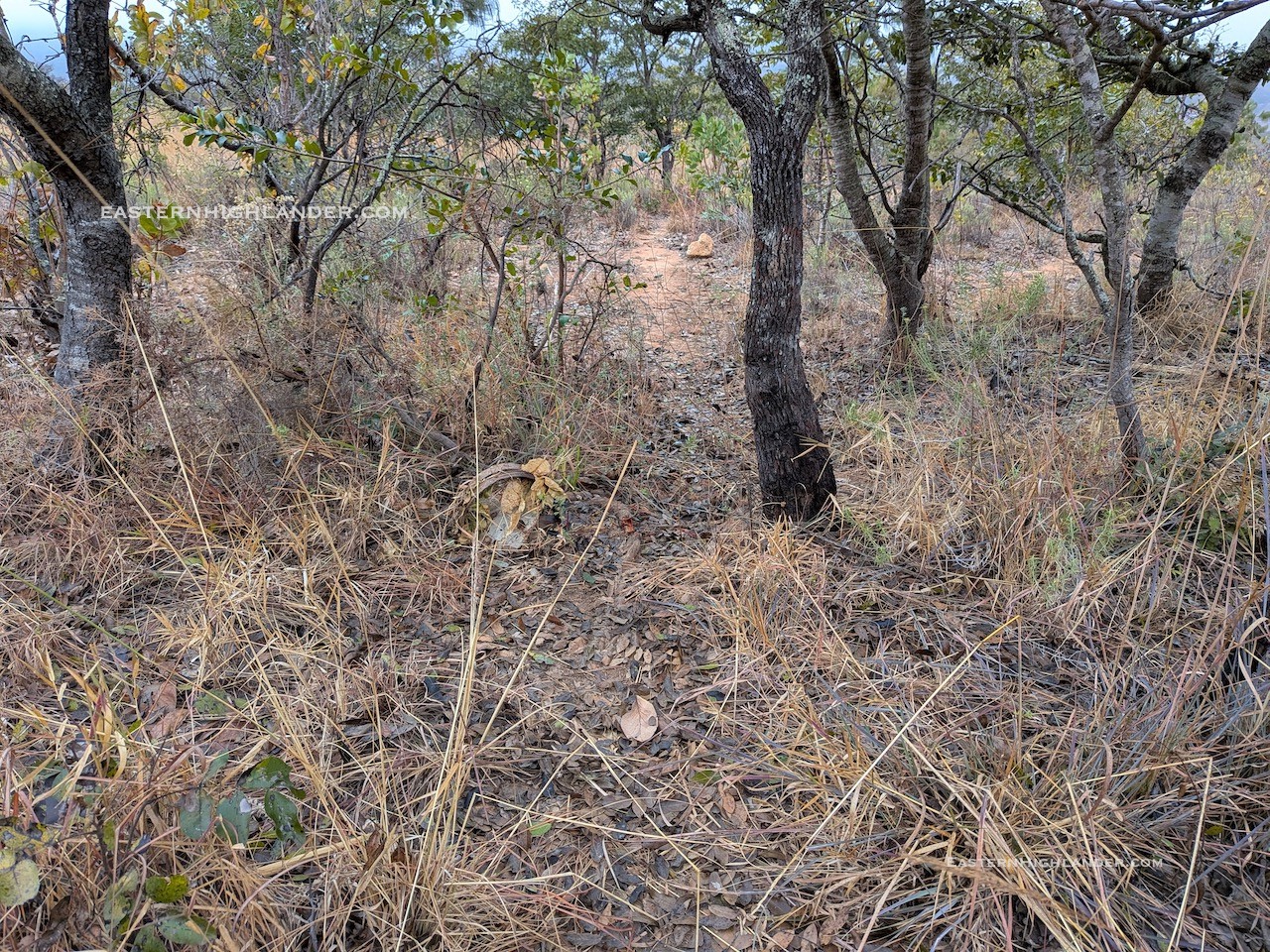
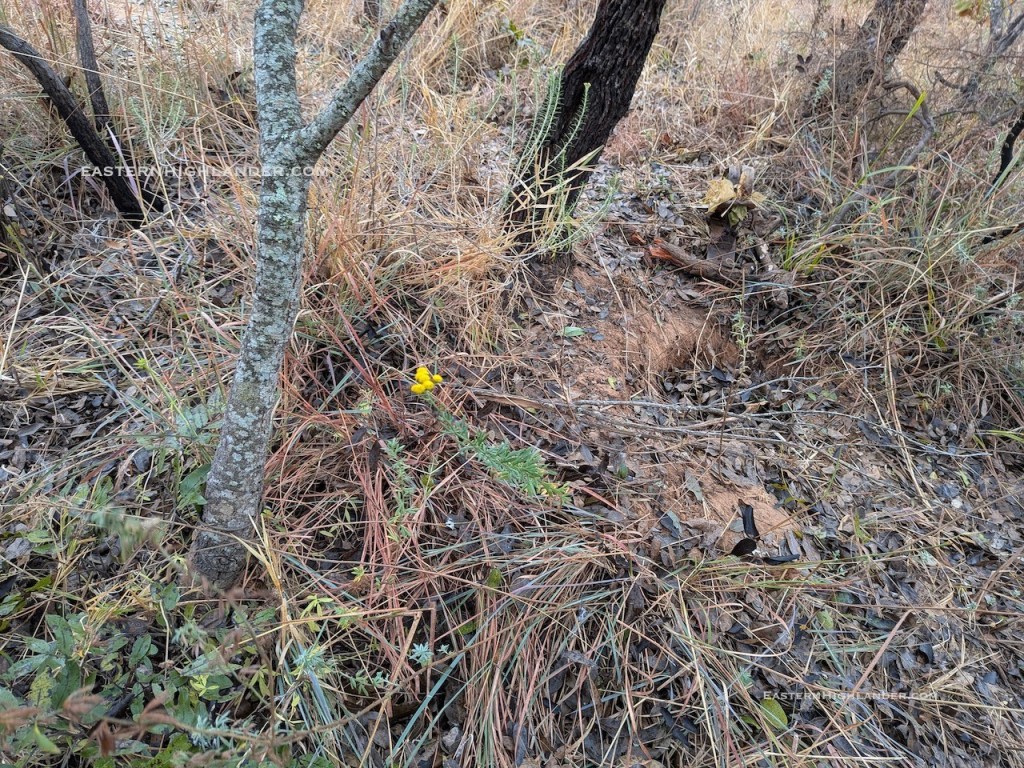
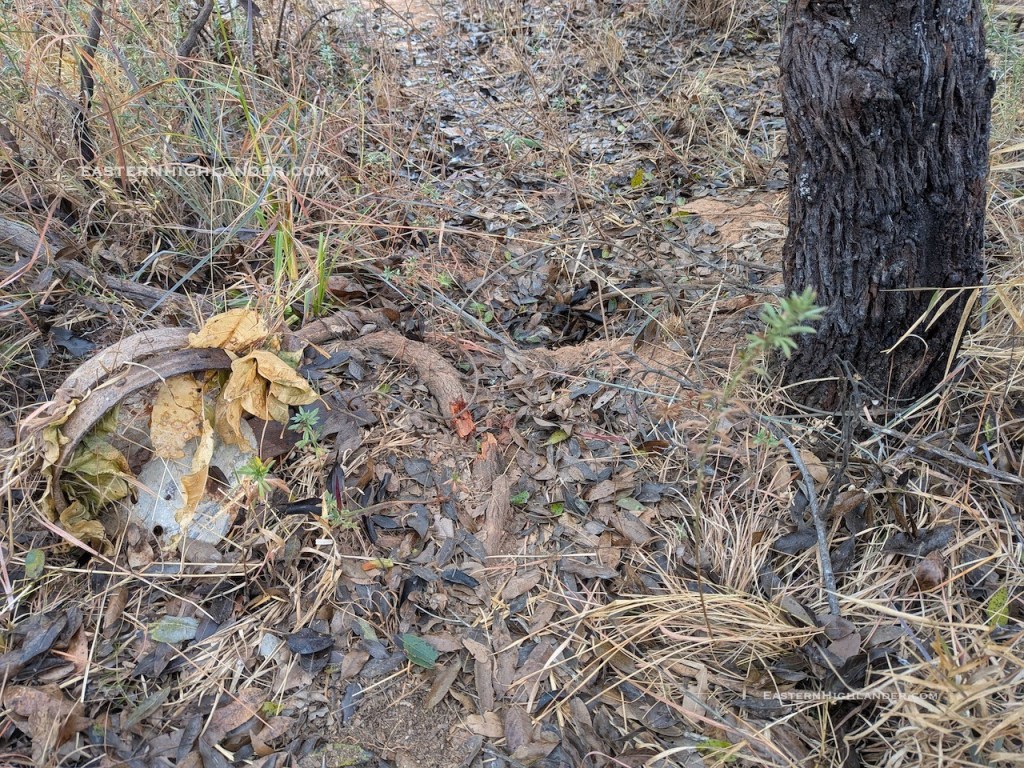
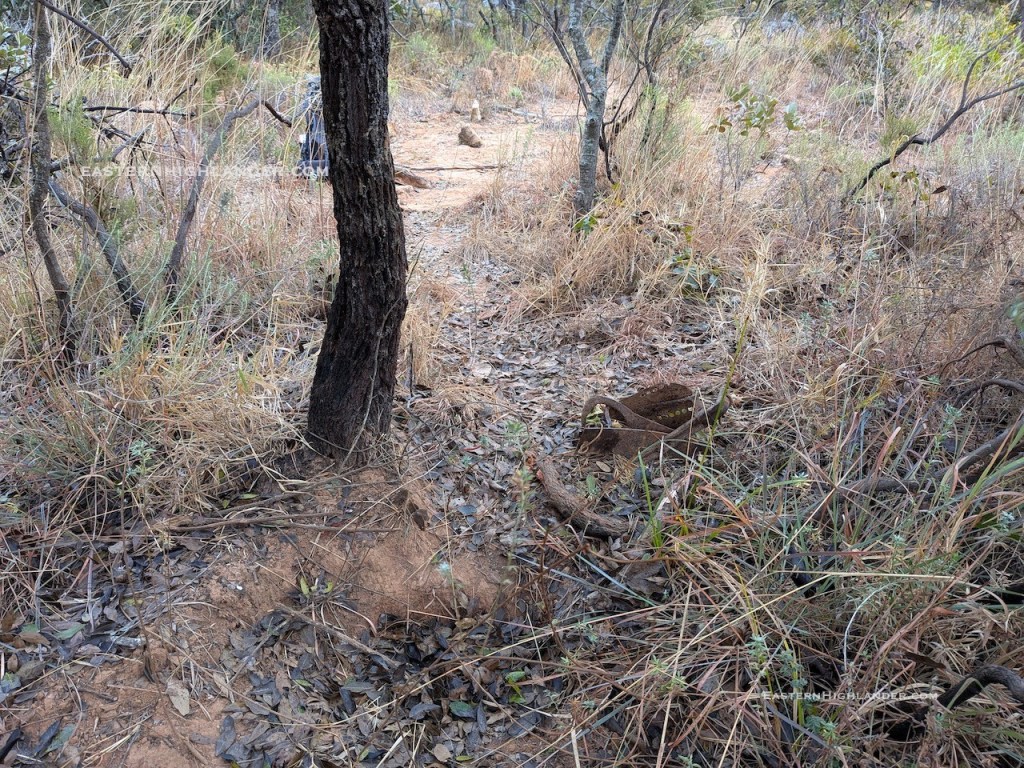
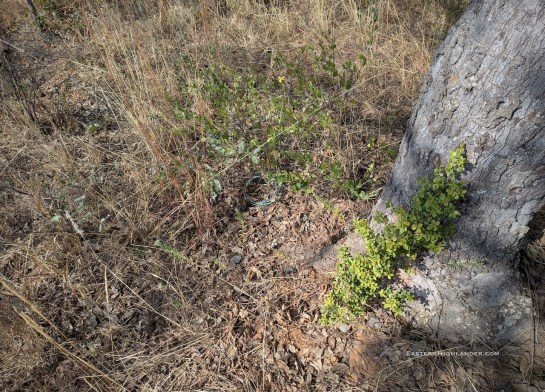
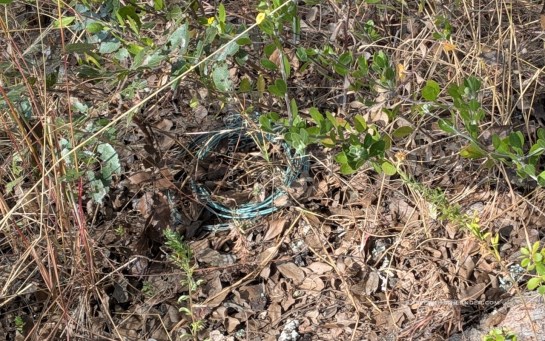
Oh this was a perfect tunnel – from the vertical entrance in the stone circle to the horizontal entrance about 6 metres outside. Too over-grown for me to search for the slit for controlling animal entry / exit at this time.
Very solid looking tunnel entranceTunnel curving away and upHorizontal external entranceOutside entrance
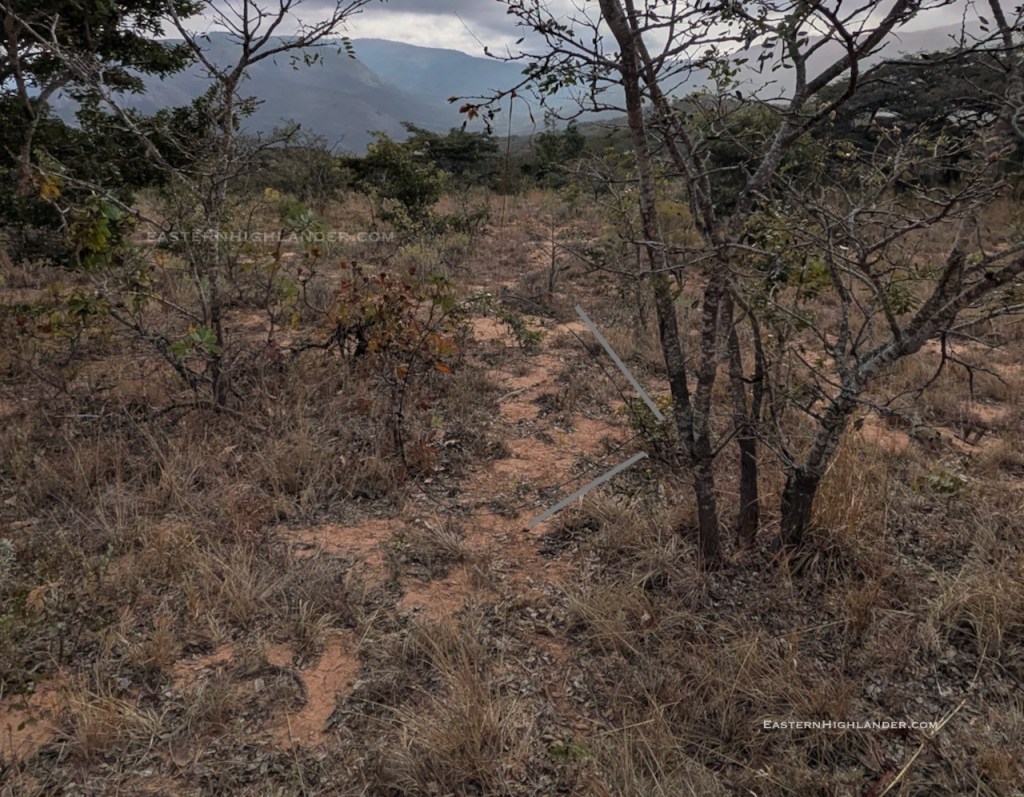
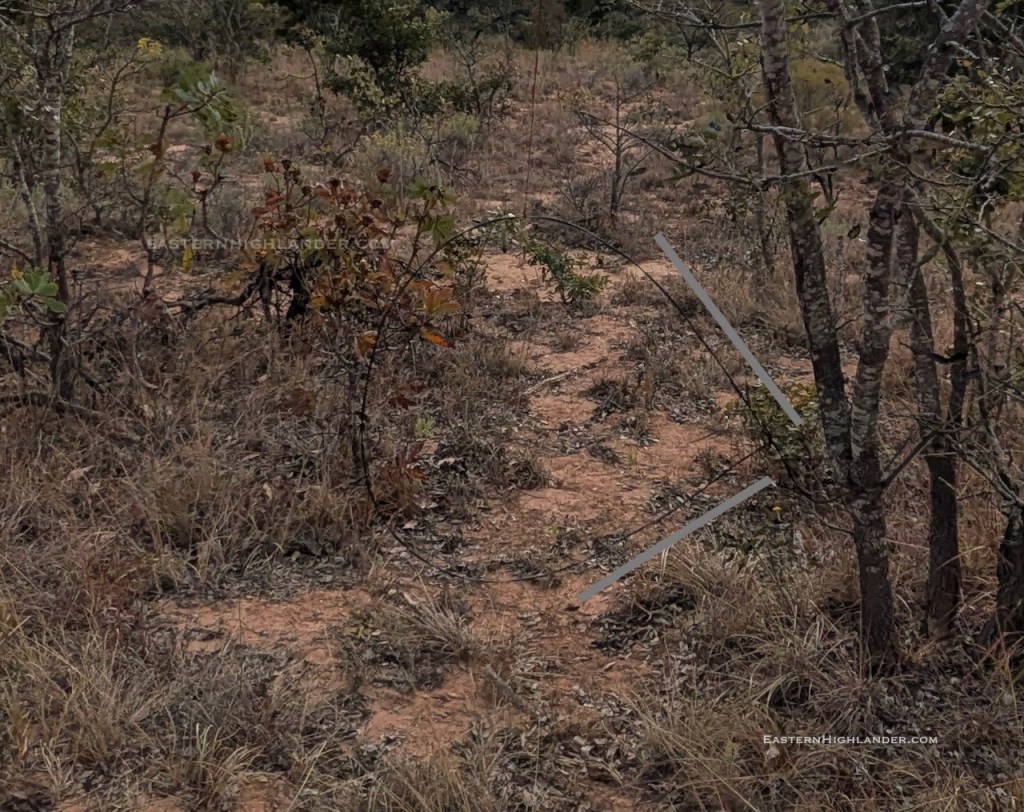
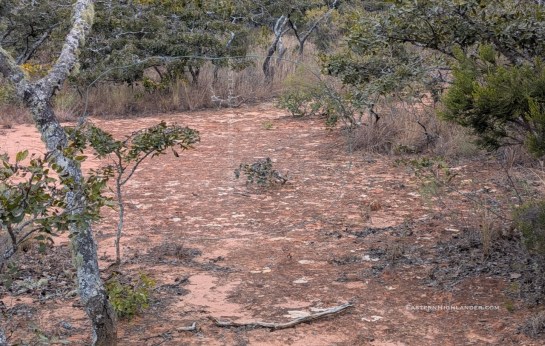
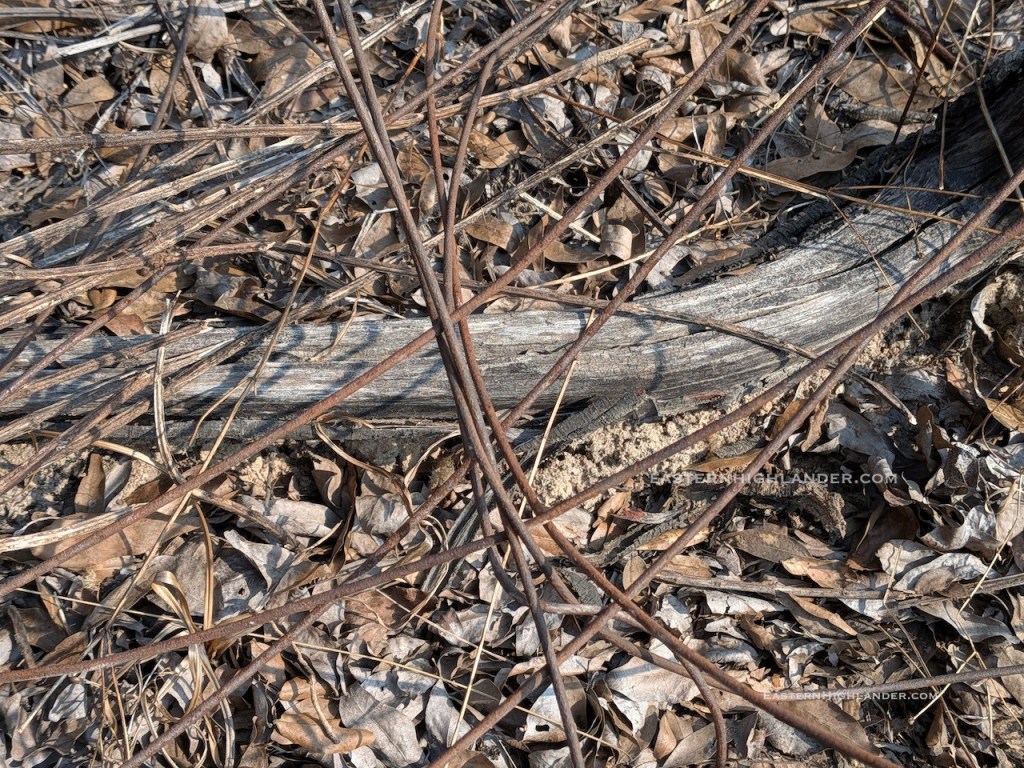
Rule No 2: If you look you won’t find. Nine times out of ten the snare finds you, you don’t find it.
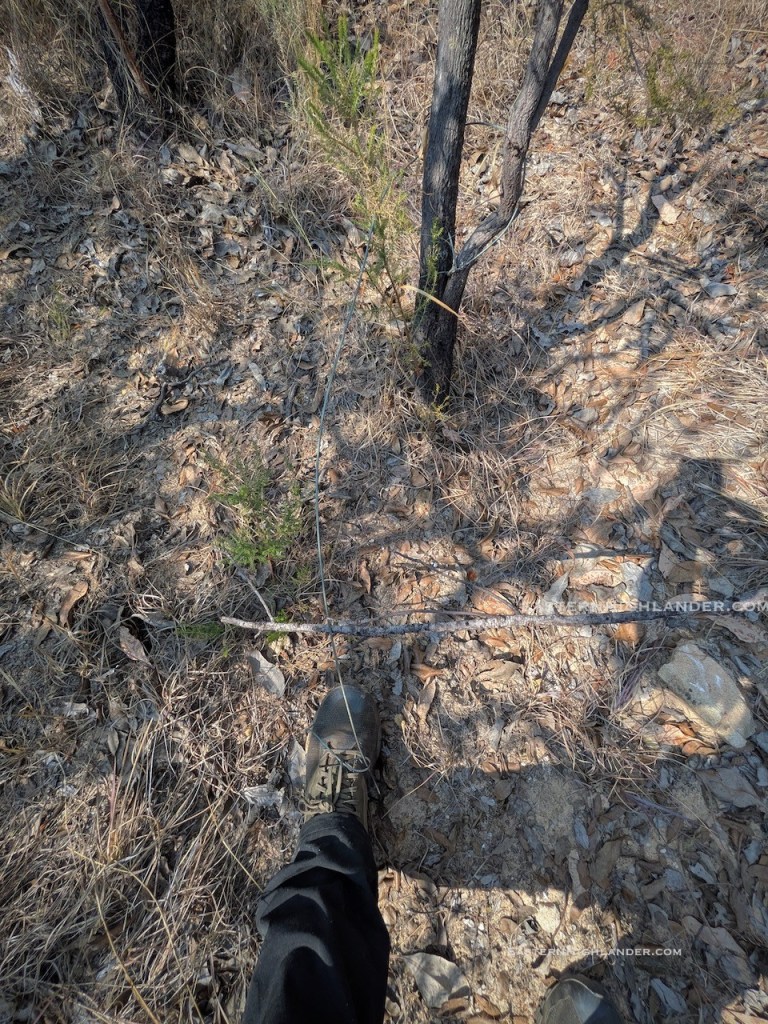
Twice yesterday I caught my foot and tugged before realising it was a low snare, but I have to say this was a first. Most of the time, merrily zooming along, you jump, having practically walked into one suspended across the path at body height.
But it just doesn’t work walking along a track between some trees, thinking, ‘oh, this would be a good place for a snare’, and eagerly start looking around – there are none there! This is rule 2, Grasshopper.
Fairly often (20-30%) set in pairs.
Here are some recent finds:
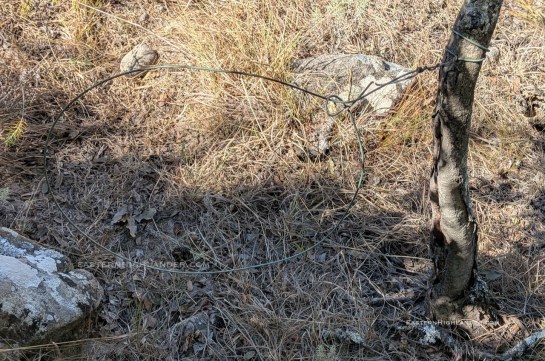
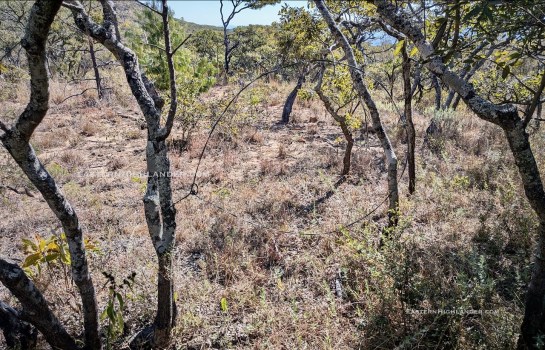
12 July 2026: walking to Nyanga and rule 2 came into effect: I was just on my way down and walked into this big one, and then I sat down beside the other four.
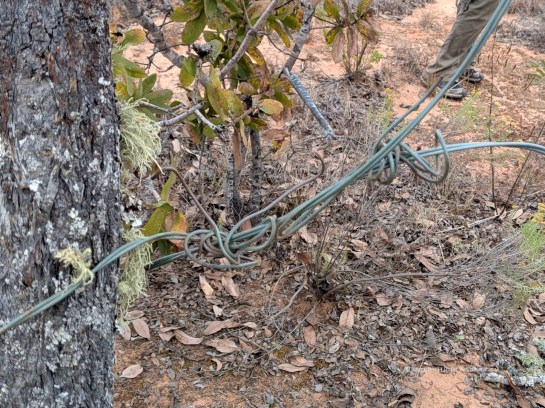
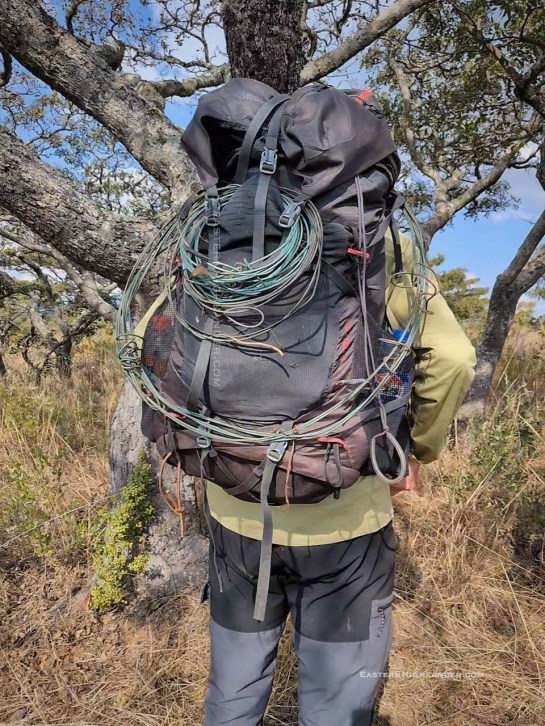
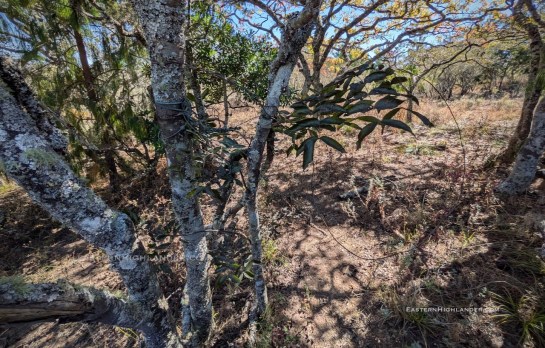
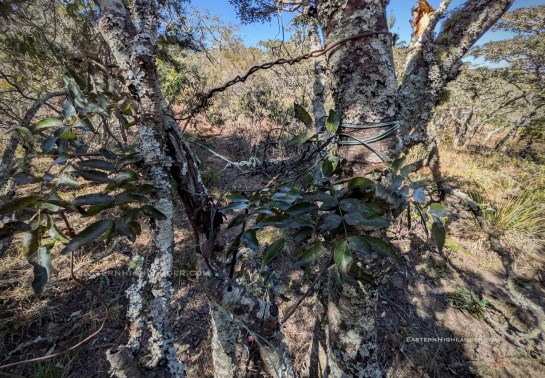
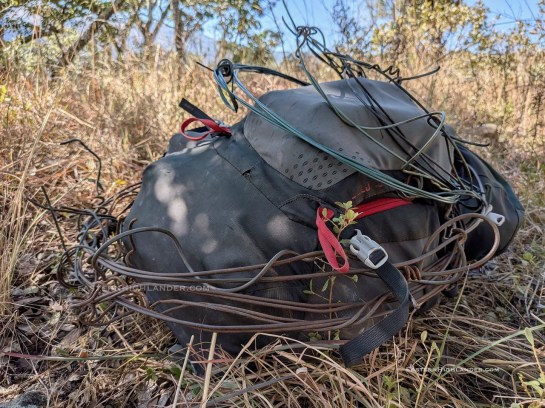
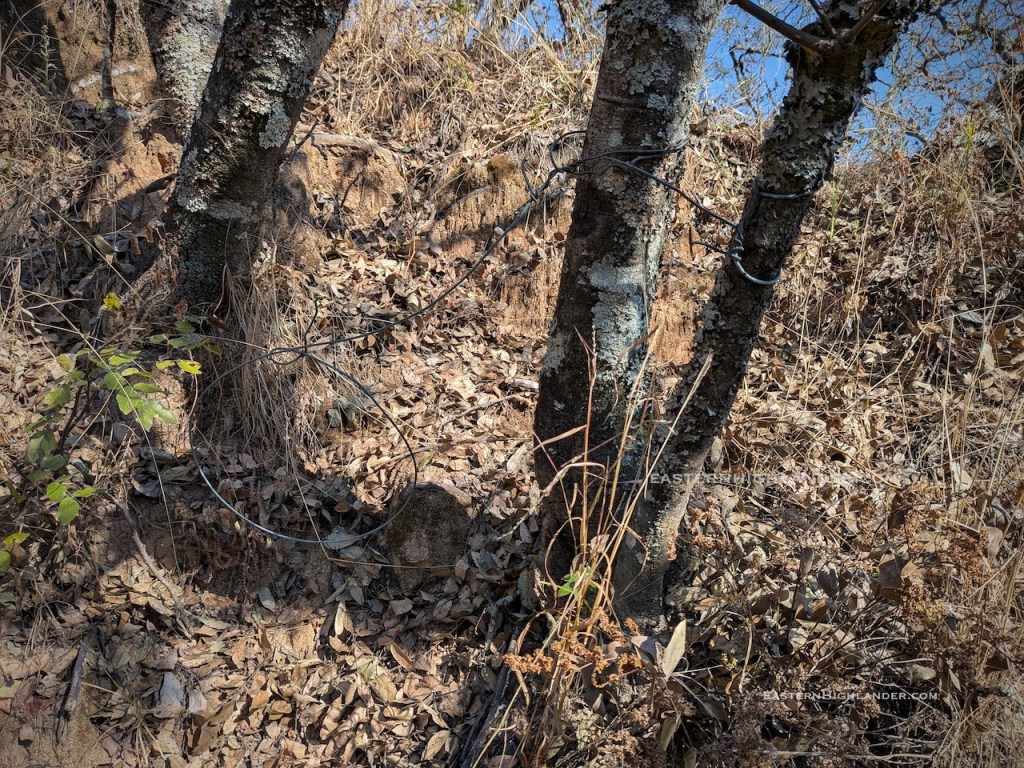
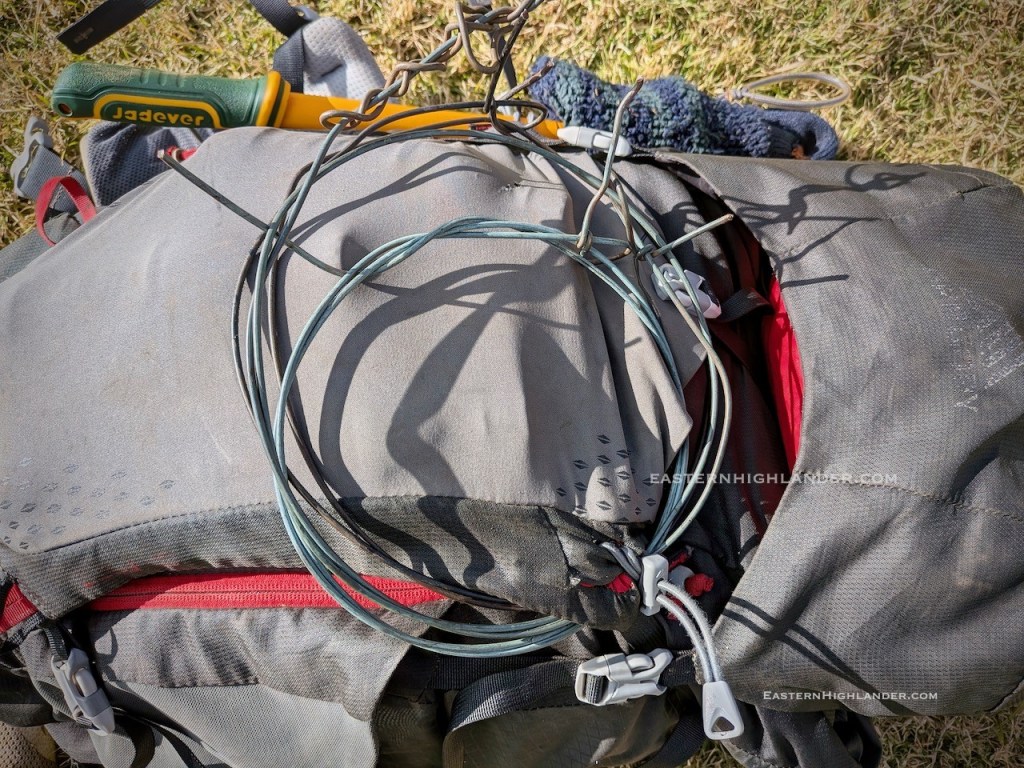
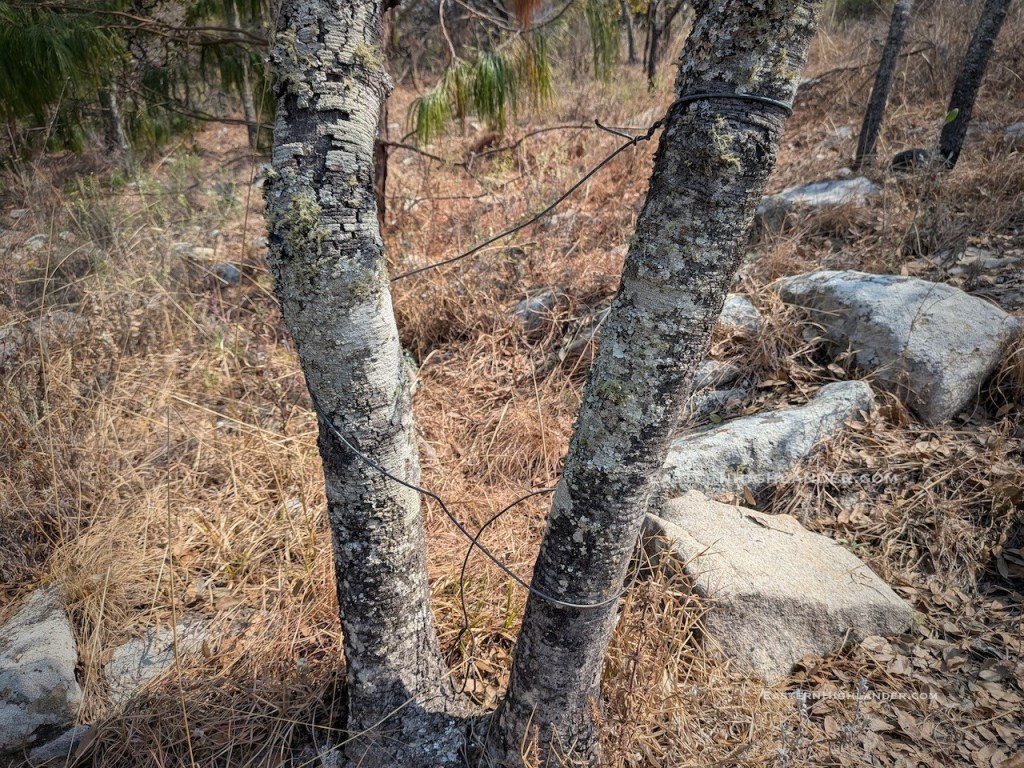
This was the giant 2m snare (pics) and the stash of four unused snares (pics) beside a tree.
(On some mobile (android) you can only scroll through if your browser is set to desktop mode – 3 dot menu)
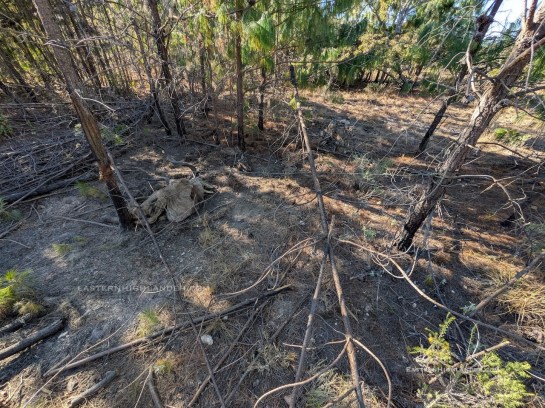
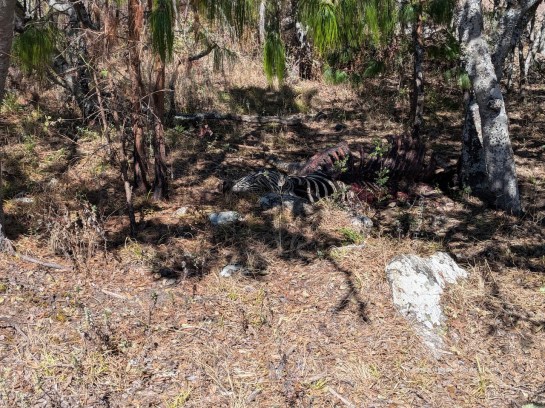
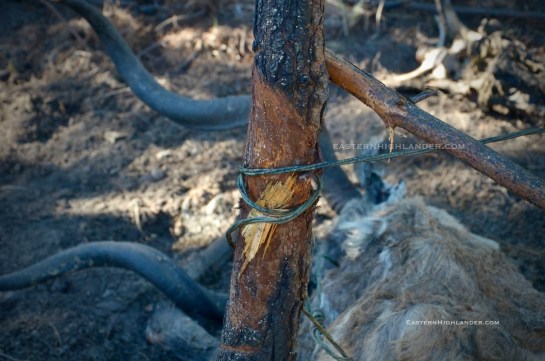
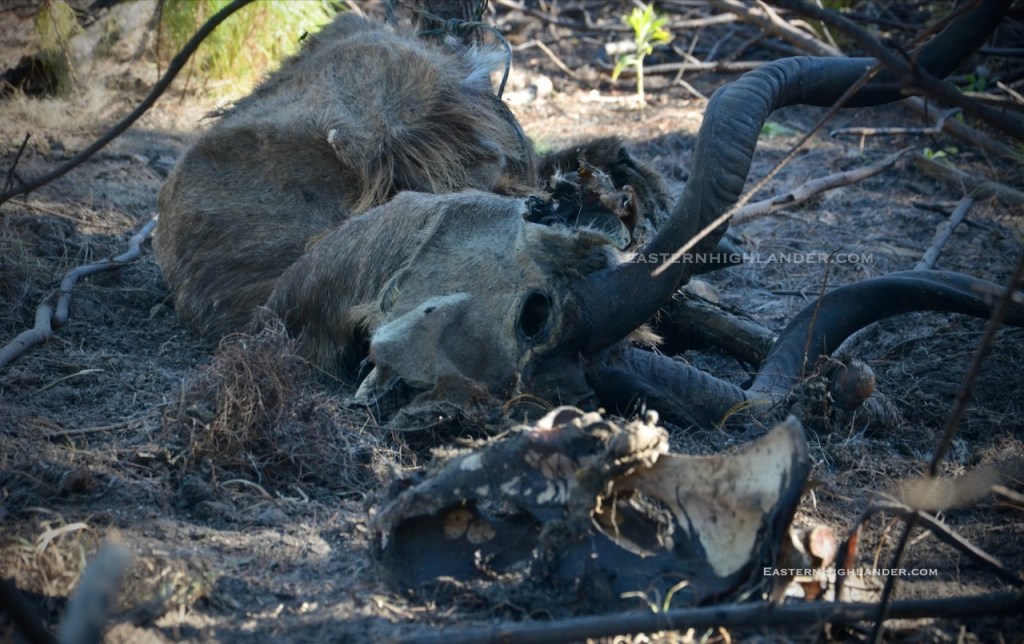
19 July 2026 – the awful one. Varying my downhill route to take in the sights I start to smell a dead animal which can happen – however this time it did not pass and just became worse until smelling my way to the remains became unavoidable. What a terrible struggle had taken place.
After some sightseeing and exploring it happened again, the airborne rot, on and off, but I was hundreds of metres away from the kudu. This time there was a horror story of flies buzzing and hissing and flying up each time I stepped within their threshold.
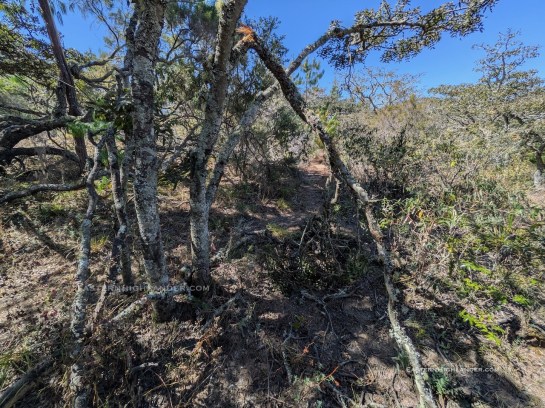
Then within 100m another, and another, making a pair of large high up snares blocking the paths, with a branch broken downwards to create direction.
Tramping on, in a bit of a mood, within 400m I had tagged two more. This was never ending, and it wasn’t even over.
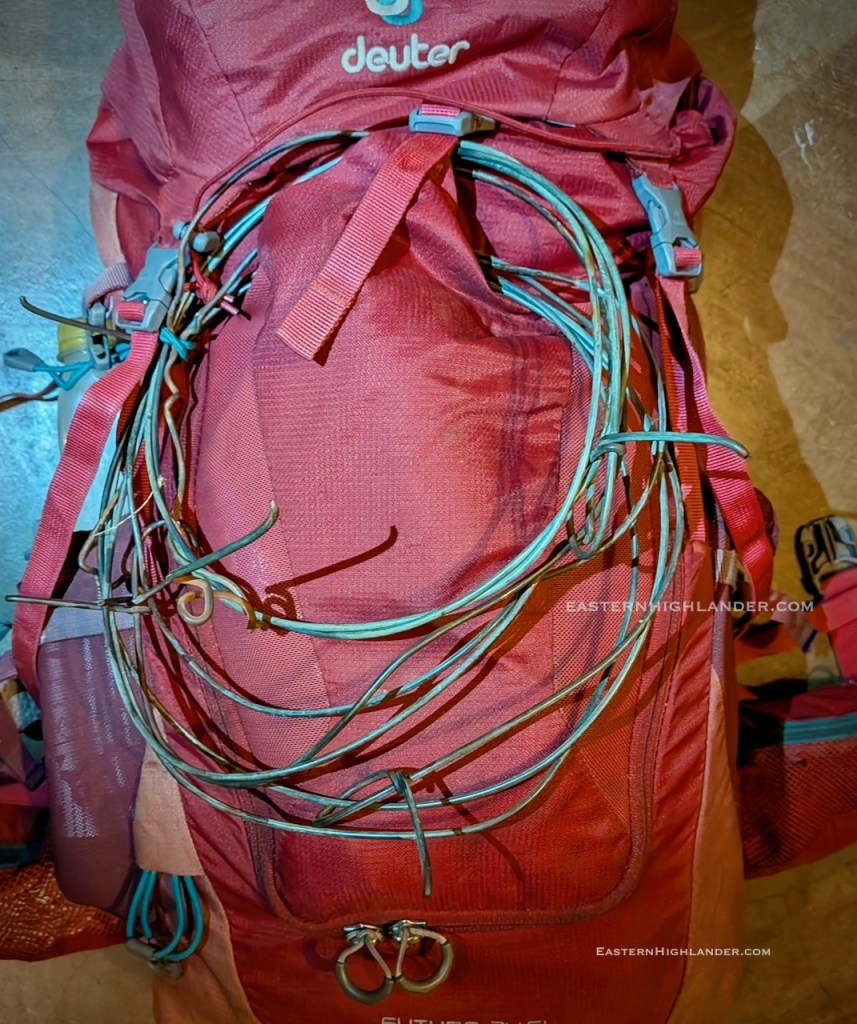
I pulled out 6 snares altogther, leaving the two dead animals to deal with later with National Parks, and bolt cutters.
(On some mobile (android) you can only scroll through if your browser is set to desktop mode – 3 dot menu)
7 August 2026: 3 snares + 2 stubs (remains of snares on trees) 8 August 2026: zero – looking too hard – 10 August 2026: 3 snares and a stub
(On some mobile (android) you can only scroll through if your browser is set to desktop mode – 3 dot menu)
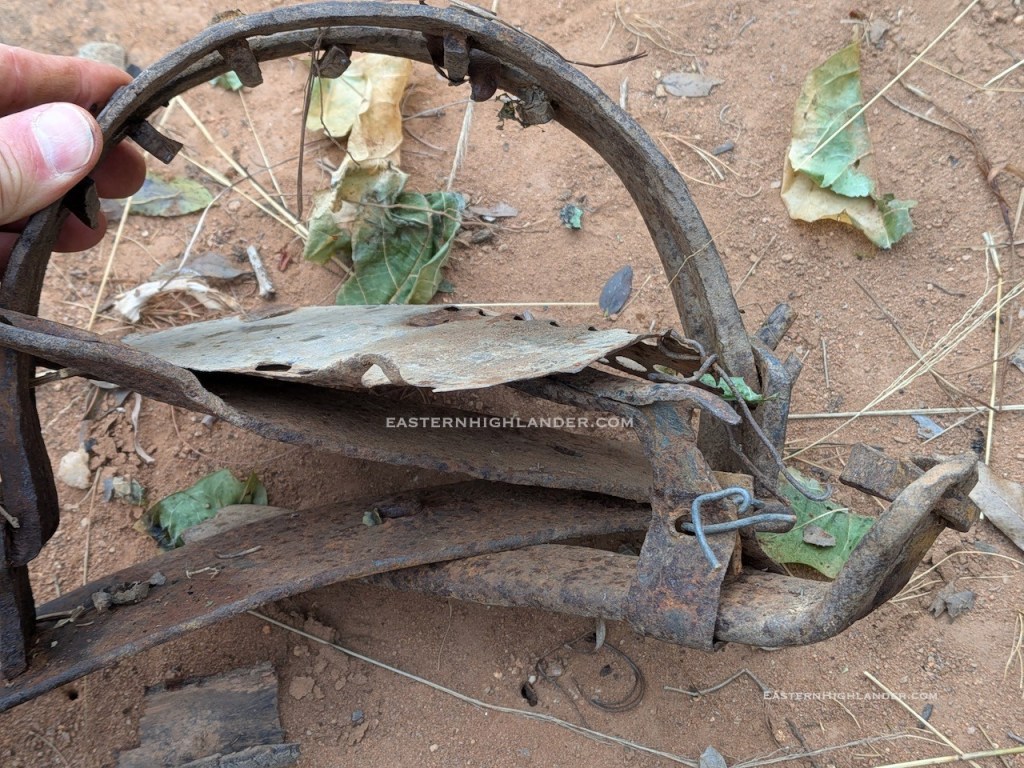
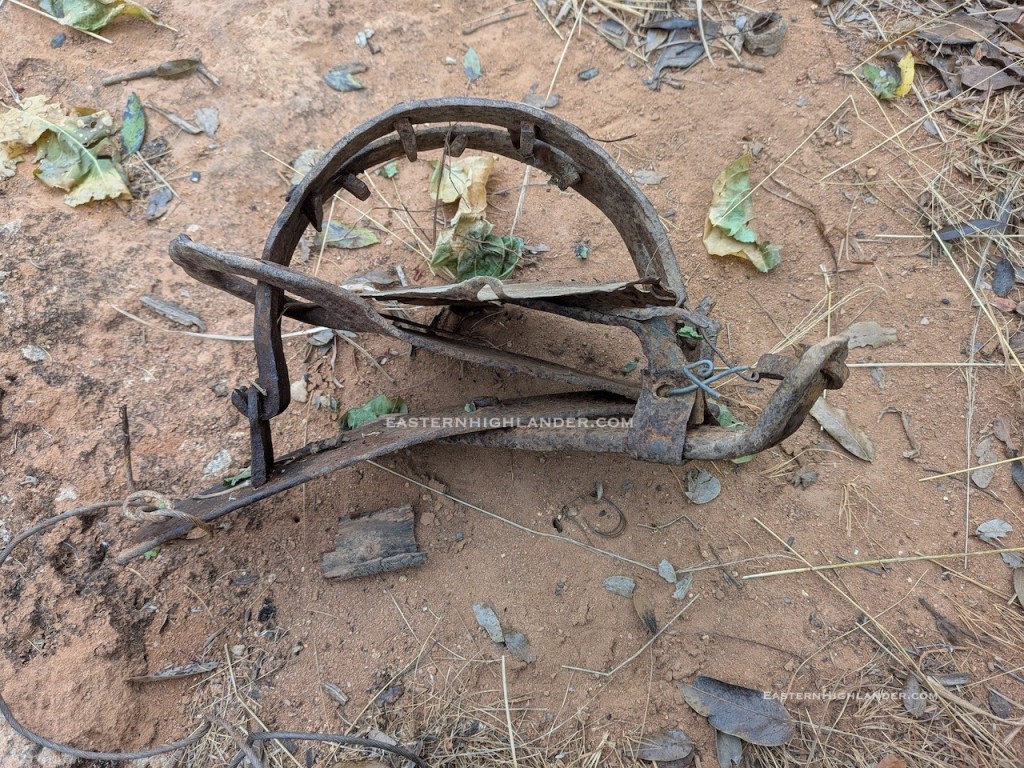
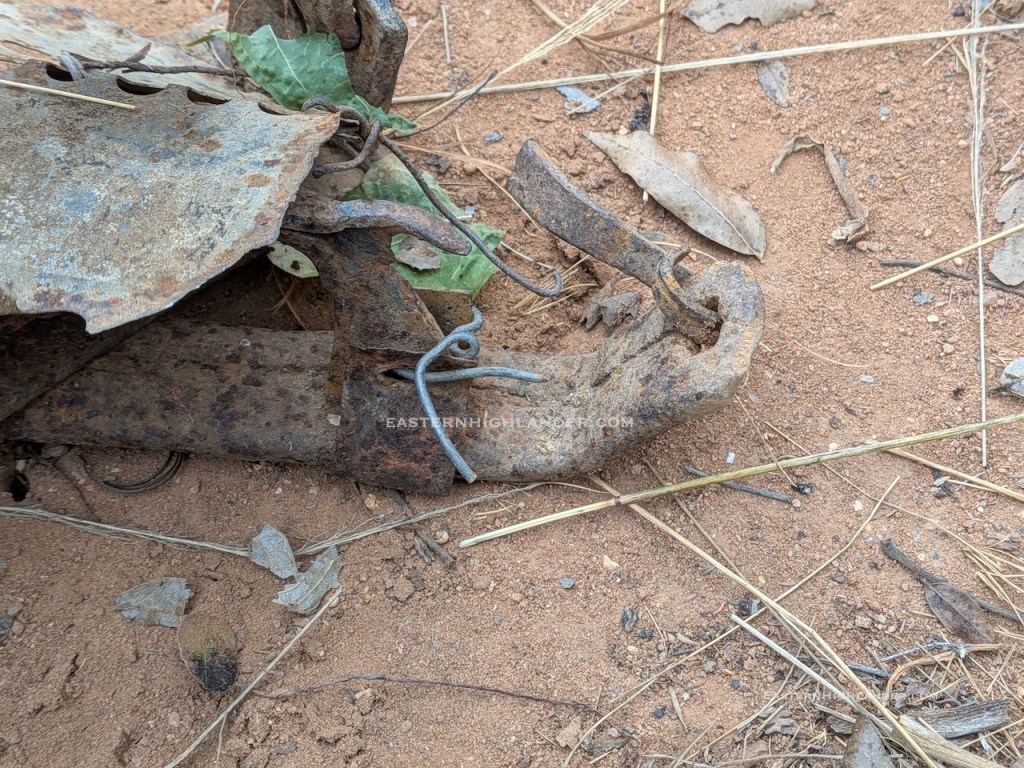
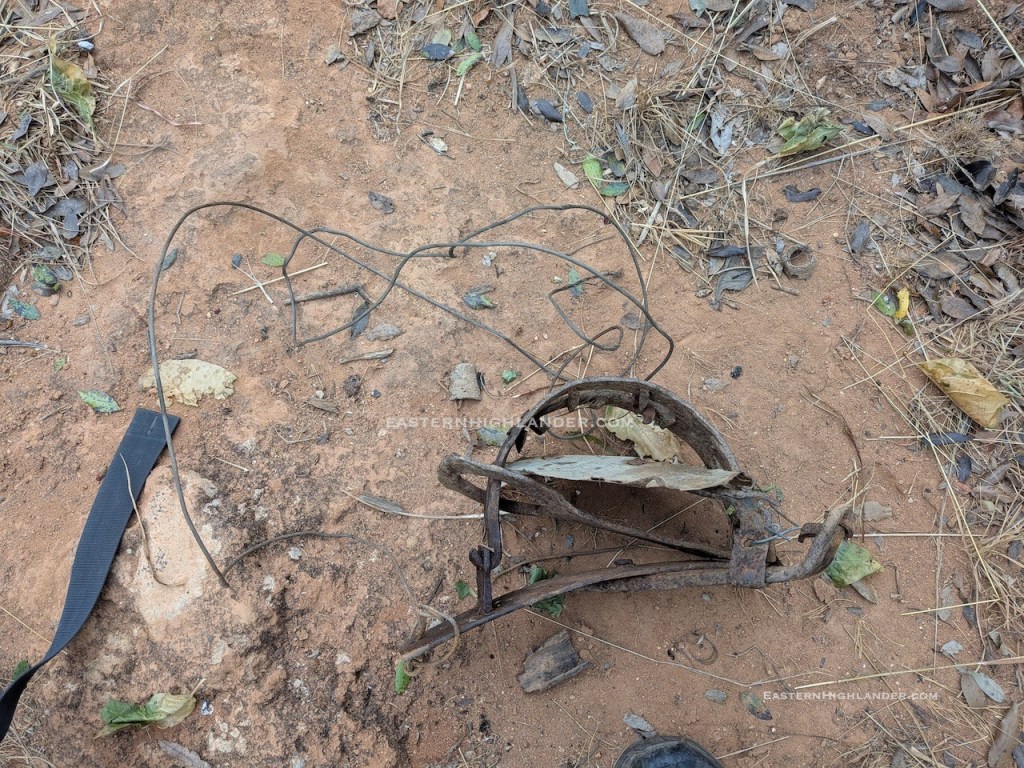
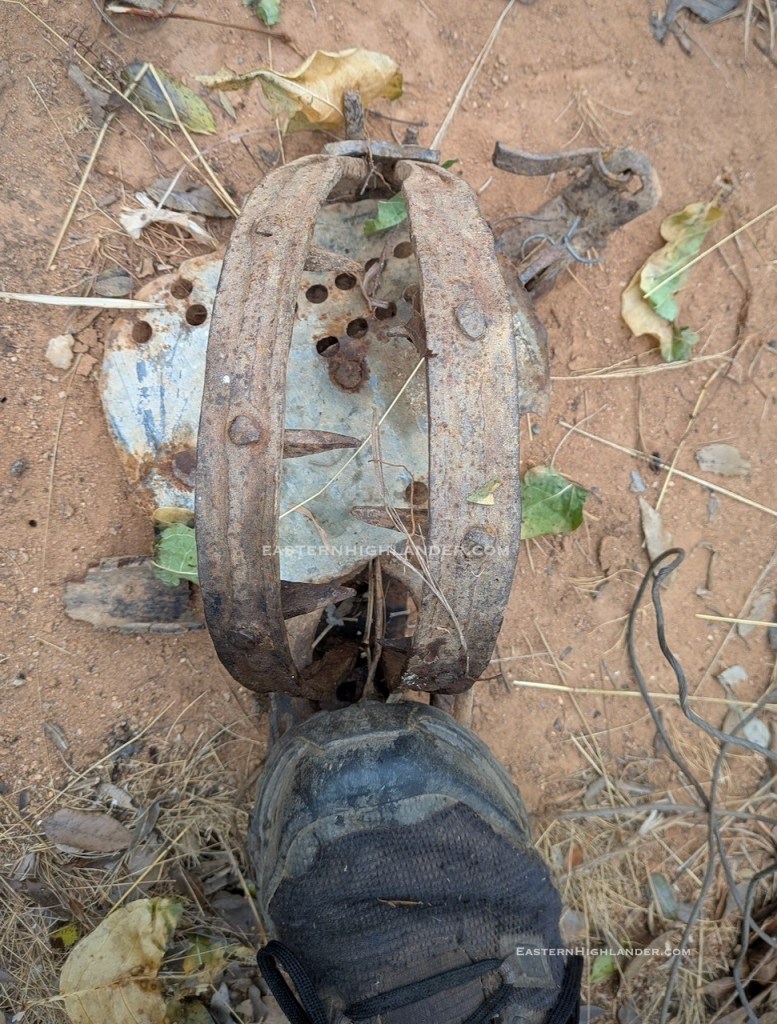
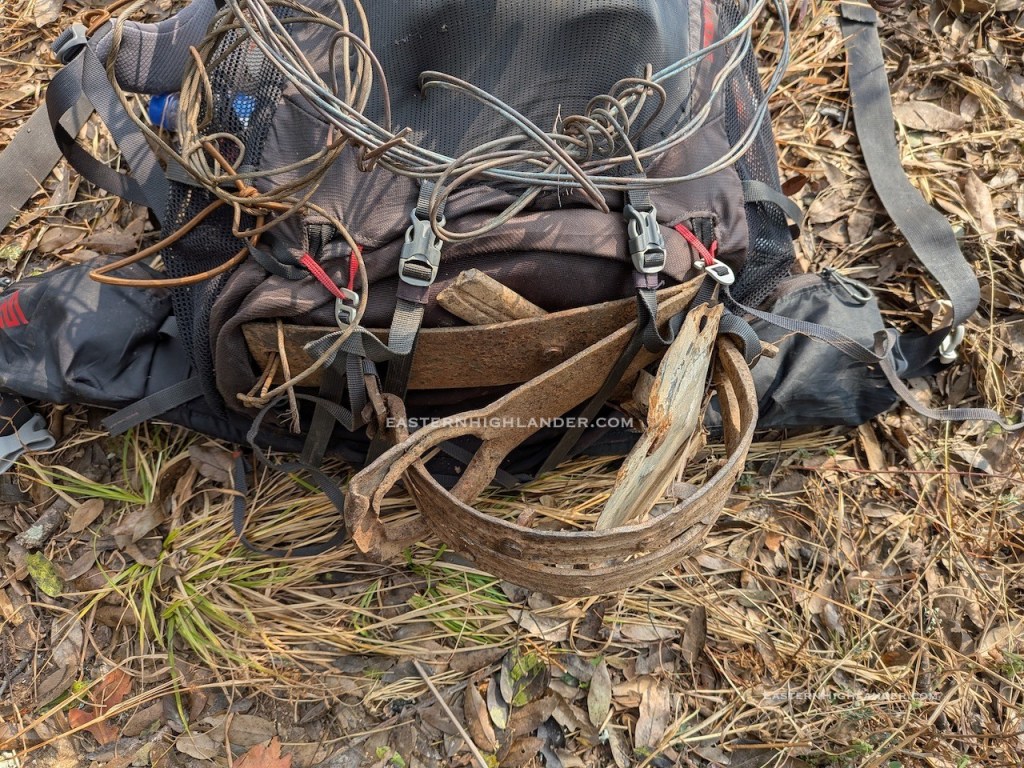
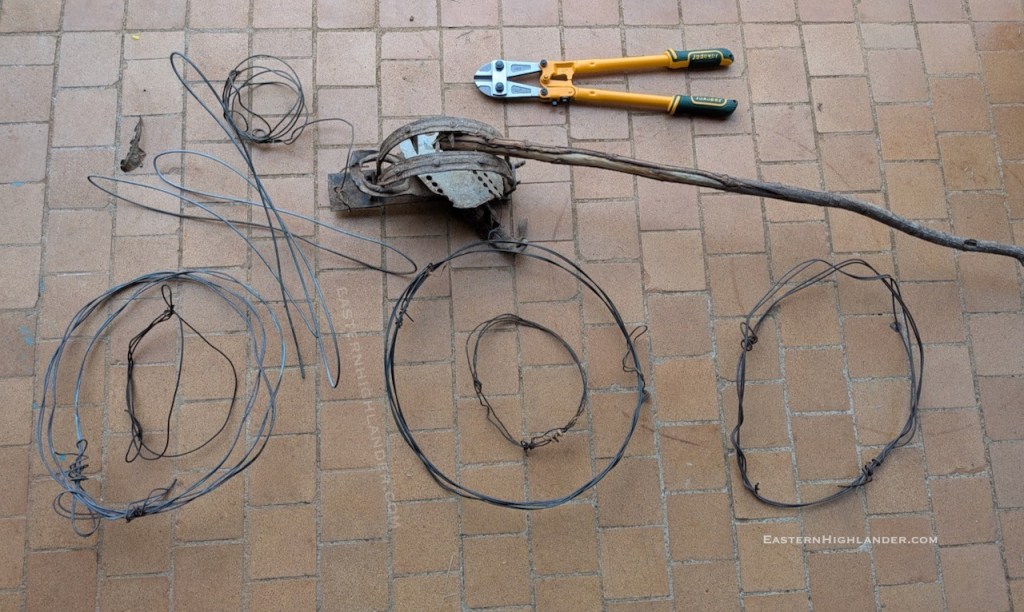
12 August 2026: 1 snare, 1 left over wire across path, 1 rusty broken snare, 1 stub. 13 August 2026: Pair of small, cable snares; then the dreaded spring trap; 1 large black double strand wire snare; 1 medium snare; 1 stub.
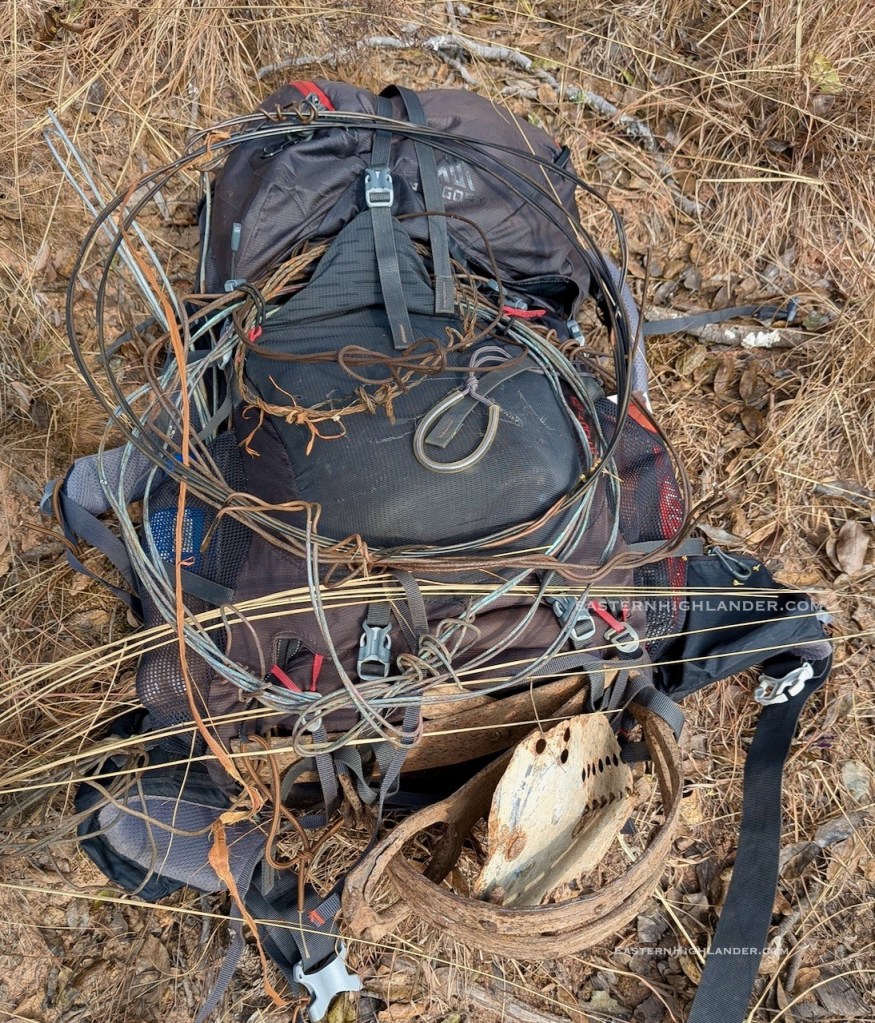
Unfortunately building up the snare collection over the last couple of months. Tragically not all empty.
Two groupings, about 2 km apart, between Nyanga and the National Park.
I have at times found the odd one or two when walking down to Nyanga over the last 5 years, but either I’m now better at finding them or there are more being set.
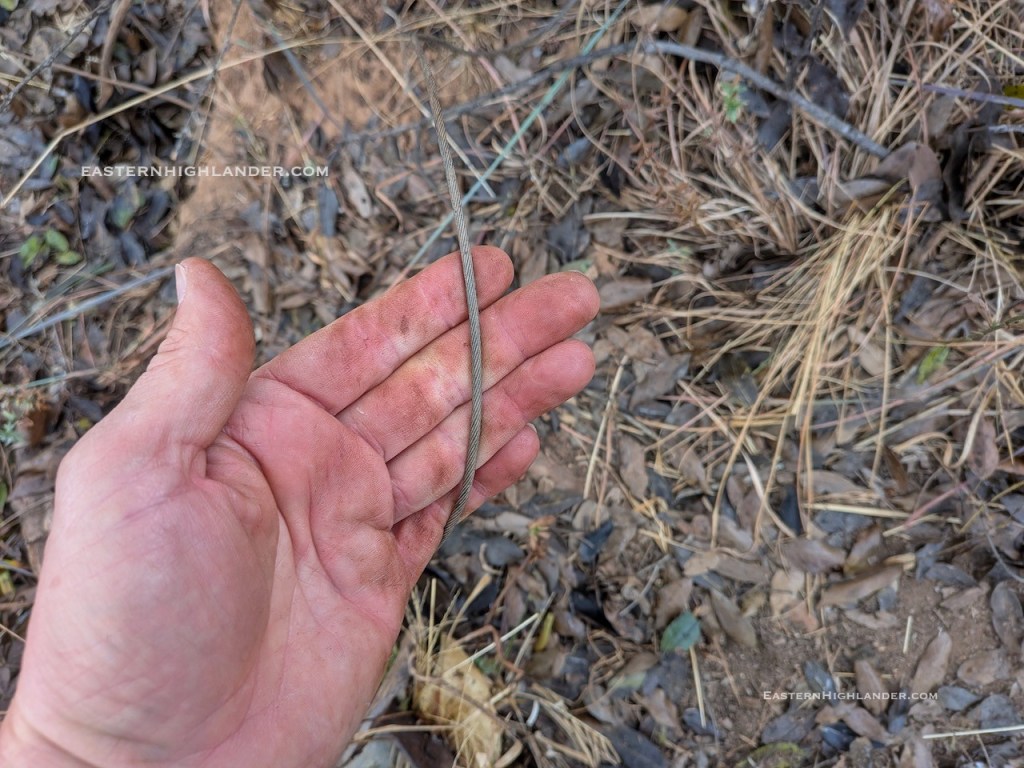
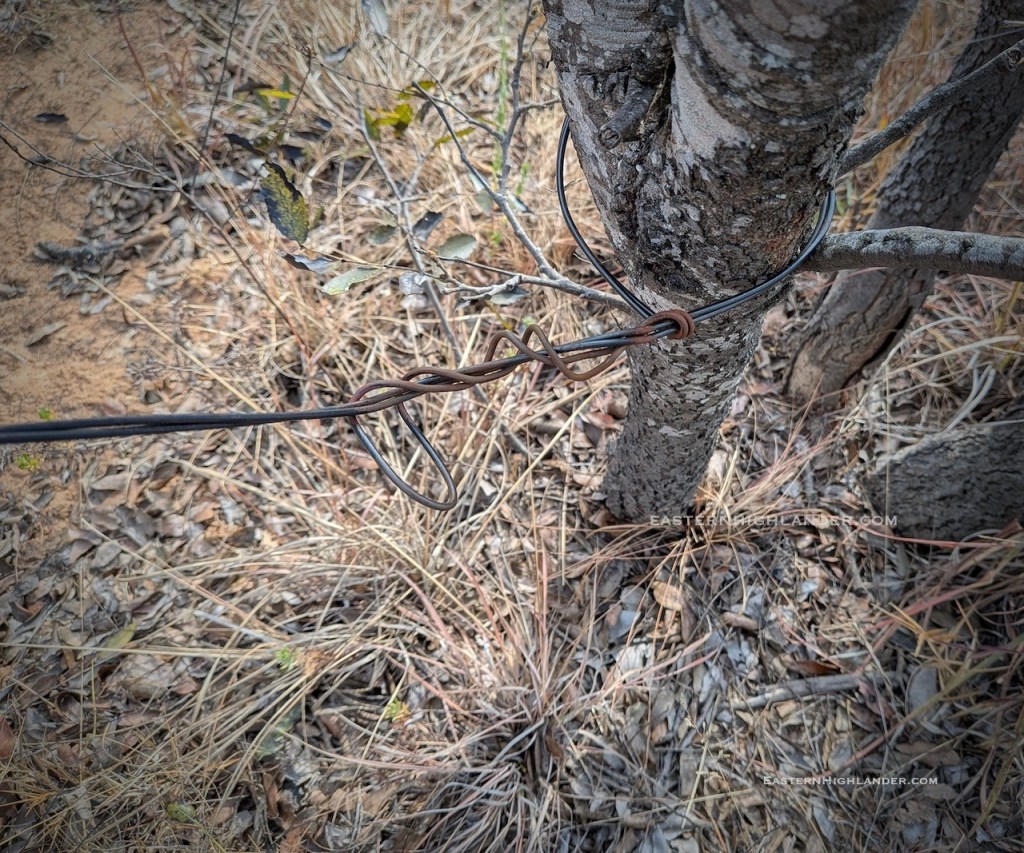
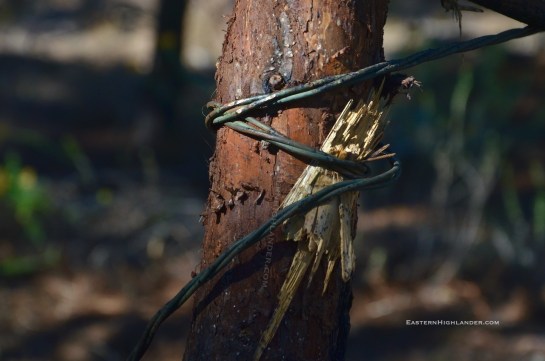
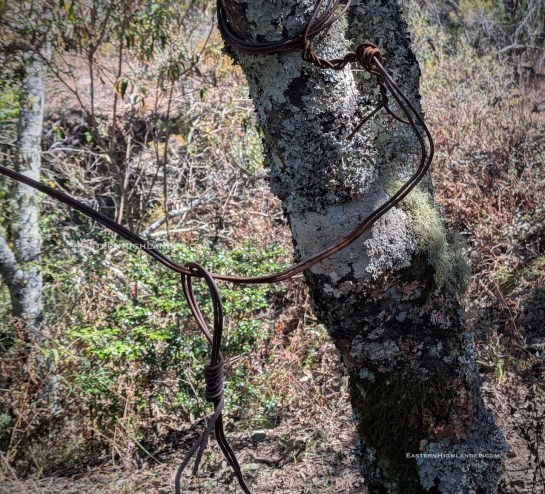
Usually made from one of two grades of very strong (ex-telephone) wire; the thicker type being very tough to unwind from the tree. Hence my recent investment in portable bolt cutters.
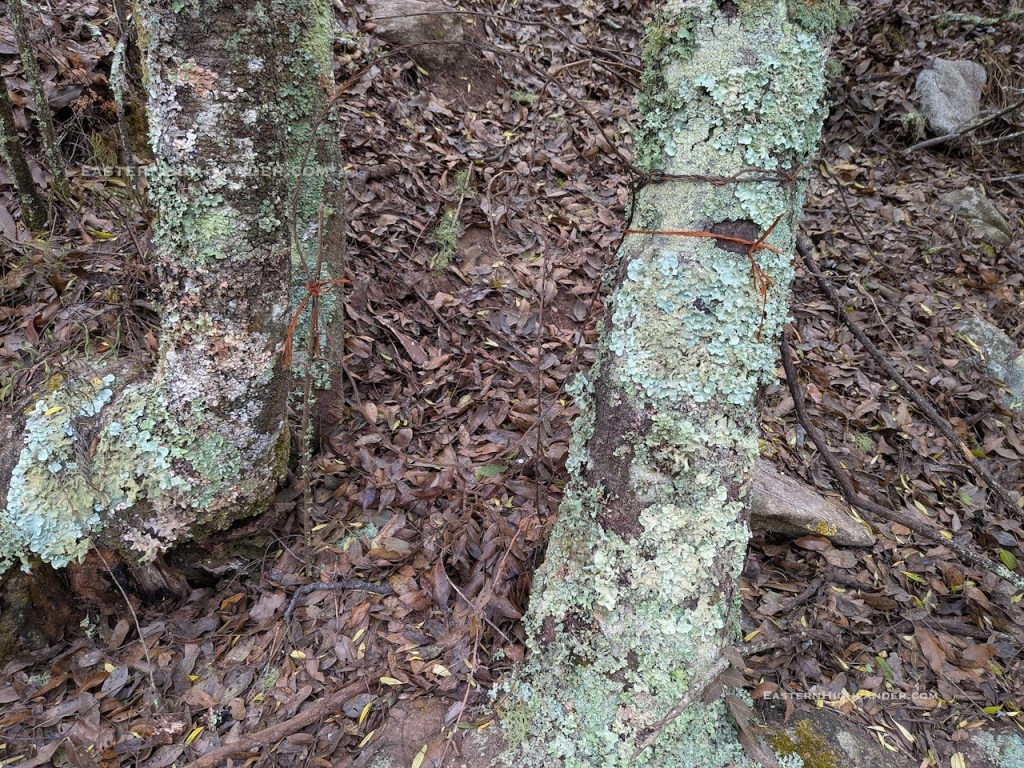
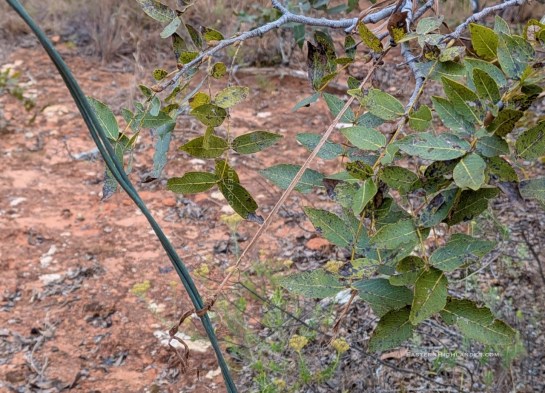
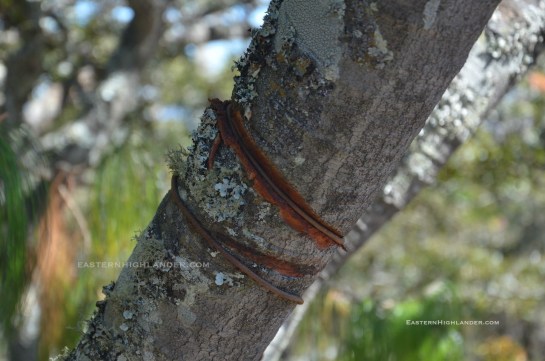
Typically each snare is a 70cm diameter circle, some distance off the ground – these are not rabbit snares. Mostly self supporting by the strength of the wire, but recently a couple have had a bark tie on the opposite side to hold in place and presumably prevent the loop being brushed out of the path. Also found in pairs – even these large ones.
Bizarrely there was a very wide one – approx 2m – my entire arm span – hanging up quite high across the path.
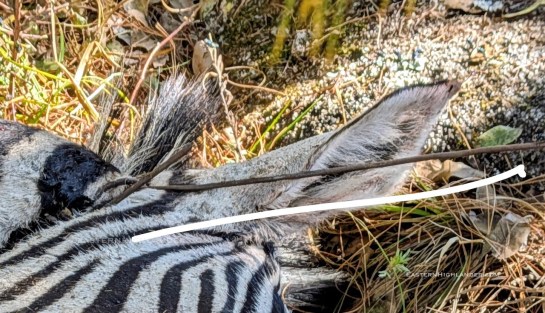
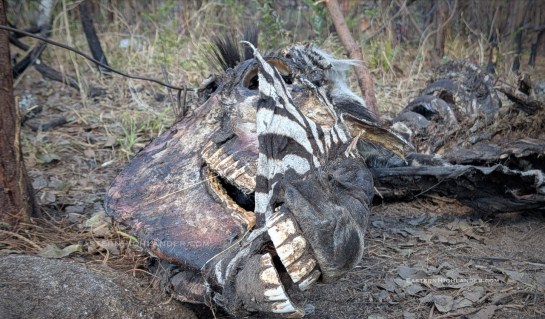
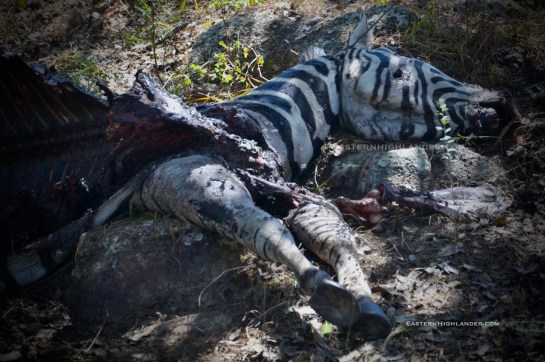
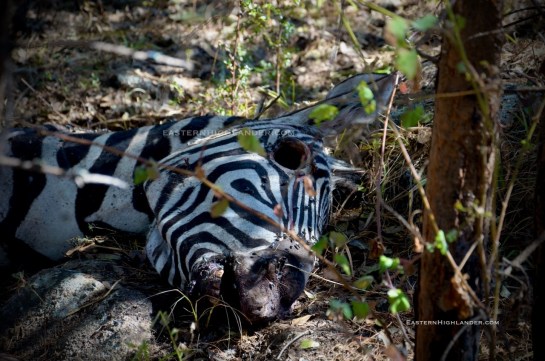
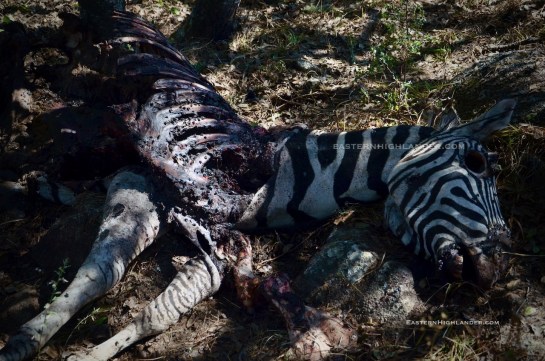
Mid July 2026 I was scoping out a new area and first found a kudu then a zebra. It’s the smell that gives them away, a wiff in the breeze but hardly a direction, then when you figure it out and get close the full-on rotting-meat stench and a thousand flies, too heavy to fly.
Hellish signs of the struggle: bark worn off by wire digging in, the ground messed up, body parts at angles, rotting red liquids in the body cavity, staring black hole for an eye, flies perched on taught telephone wire, legs, hooves, white teeth, horns twisting, jaw on the ground.
There is nothing you can do; the tragedy already happened. And why were they left there to rot?
I used to look at the old wire they were made of, and think these snares were a legacy, been there for years – then, after sitting under a tree to rest – this was the day of the 2m snare – I was unfolding myself and twisting round to get up when I found four unused coils of (very light-blue-green) wire, piled neatly in the grass, one end already made into a small loop, the other end straight and unused. These were the thinner small type – maybe working out to 30 cm across, and typically found a little lower to the ground – still too big and tough for rabbits though.
Another never-to-be-forgotten Nyanga day – going up Mount Muozi. I got a shika-shika from the rank in Nyanga to Chiramba which is where the road goes up to Bende Gap. Frustrated 2 hours in the sun before a fellow traveller found us a lift on an empty lorry going up to collect timber. The driver had just picked up his morning drinks and mixers in the local shop – if you know you know, unfortunately. Near the top they stopped to pick up water from a stream – a warning that there was no good water at Bende Gap.
From Bende Gap i just started walking towards Bende itself – no lifts forthcoming. So that was a good couple of hours slog. There the shop owner gave me some of his water and I filled up with + 4 litres in preparation for the walk to the campsite and potentially the next day. I had already found out that there was no water at the phone mast (booster) mini-compound for the collectors of pine resin, they have to walk down to a stream themselves.
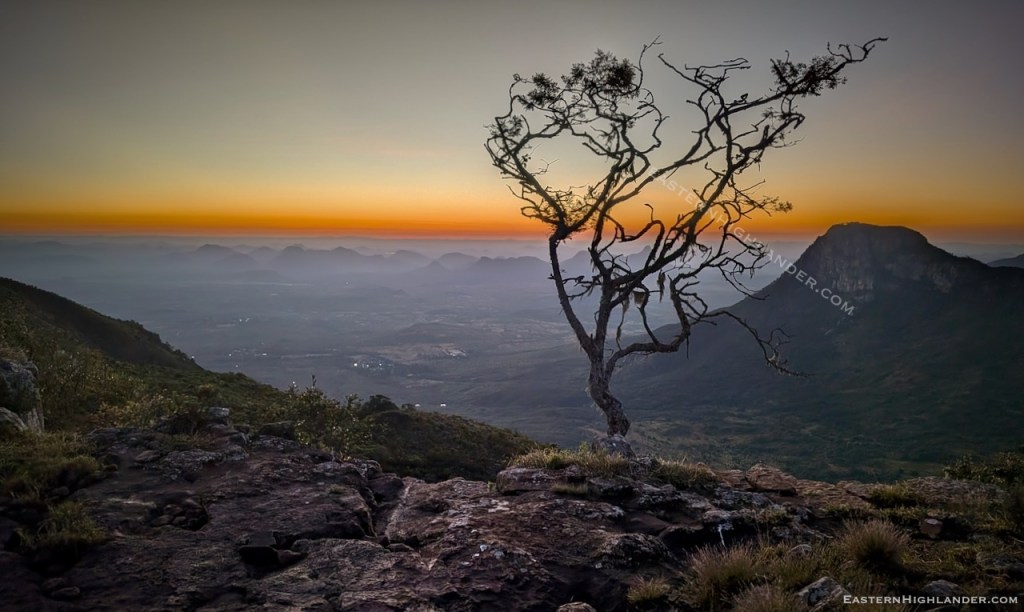
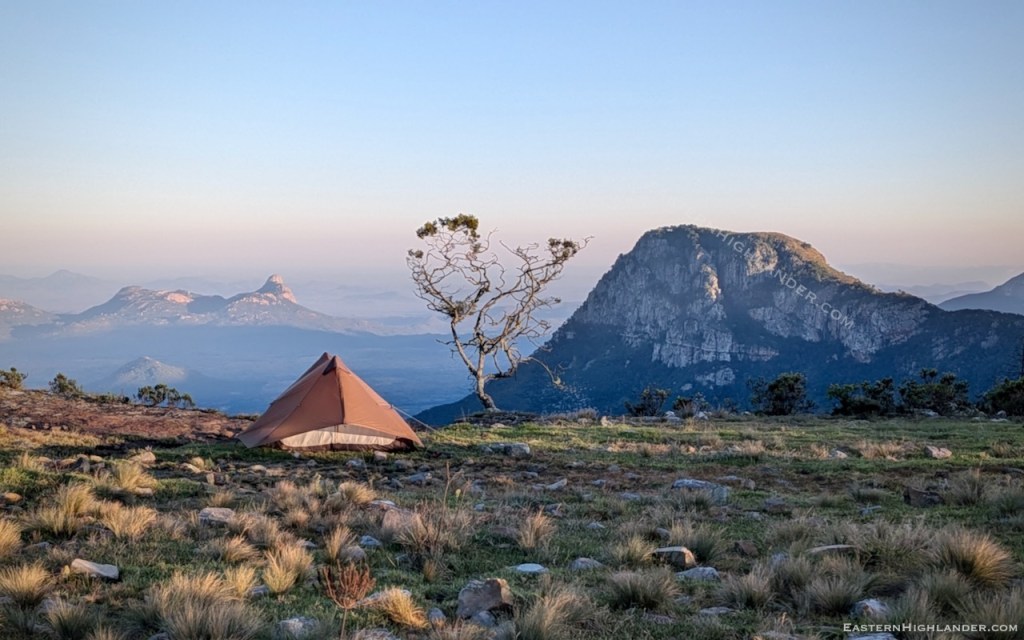
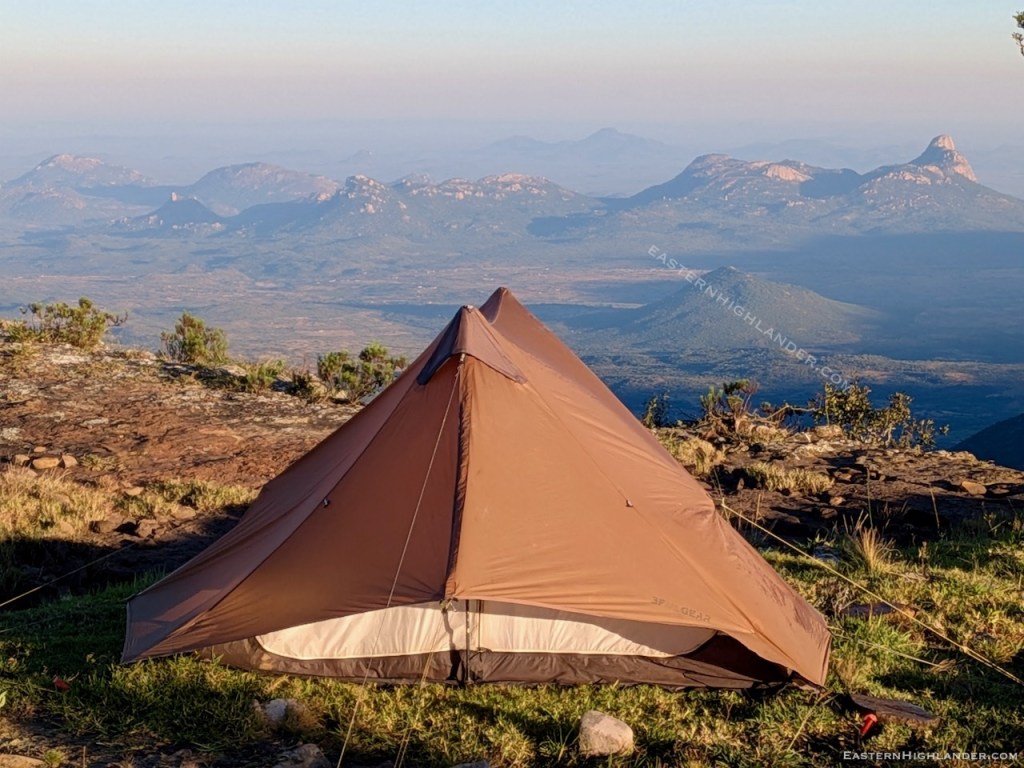
Anyhoo, I got to the magical campsite as it was getting dark and found a dry stream! The start of water pressure. A few photos and some noodles.
The night was alright and there was little condensation so the next morning was easier than usual in packing up. Followed the fire guard along the edge until I was forced up onto the dirt road to get the the turning point west. Logging trails gave way to a small amount of bushwhacking until I found a hidden stream for a refill back up to 4 litres. Some bothersome walking over stone strewn land, more or less heading where I wanted, to go by sight. A descent towards the saddle with a stop part way to refuel and drink – knowing that would be unlikely once it got serious! There is some interesting living history around this area.
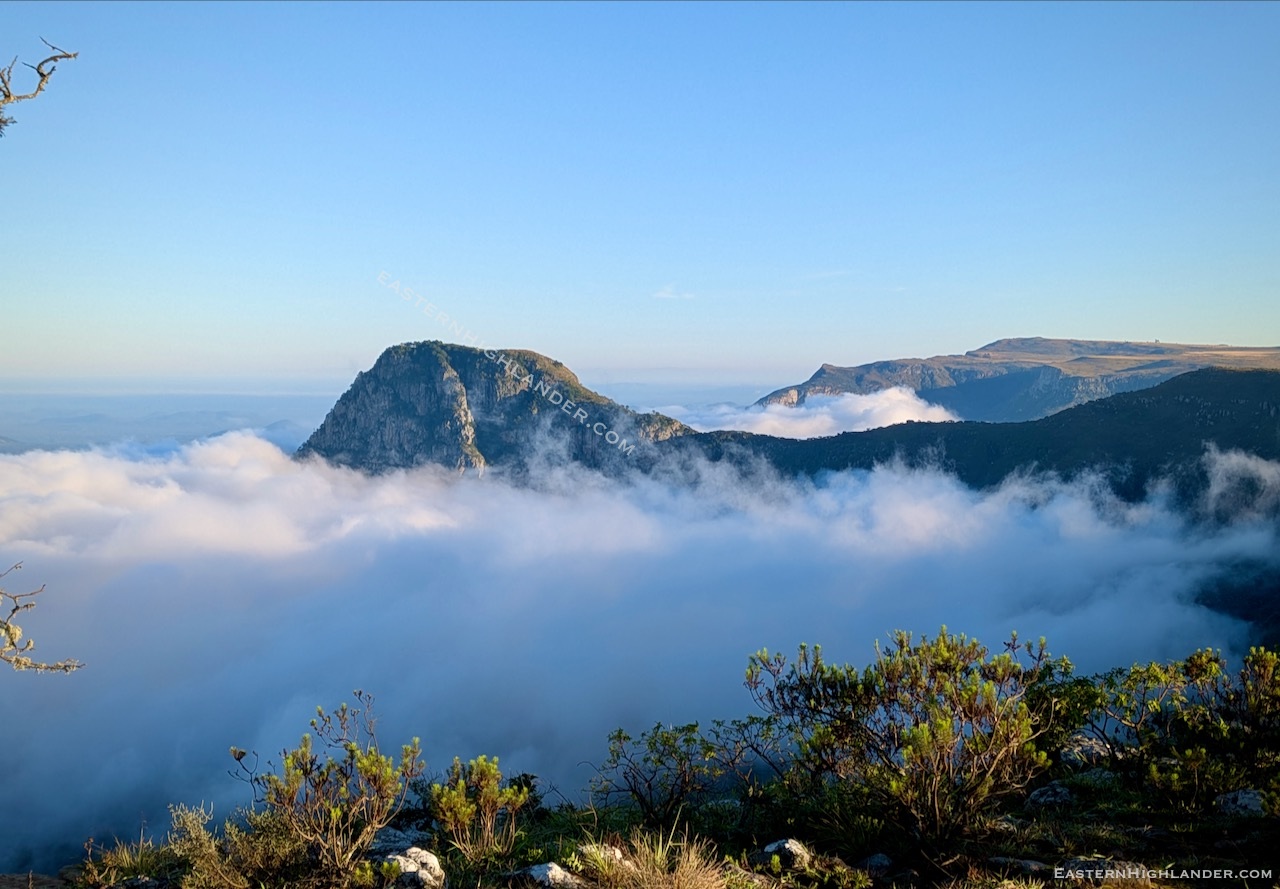
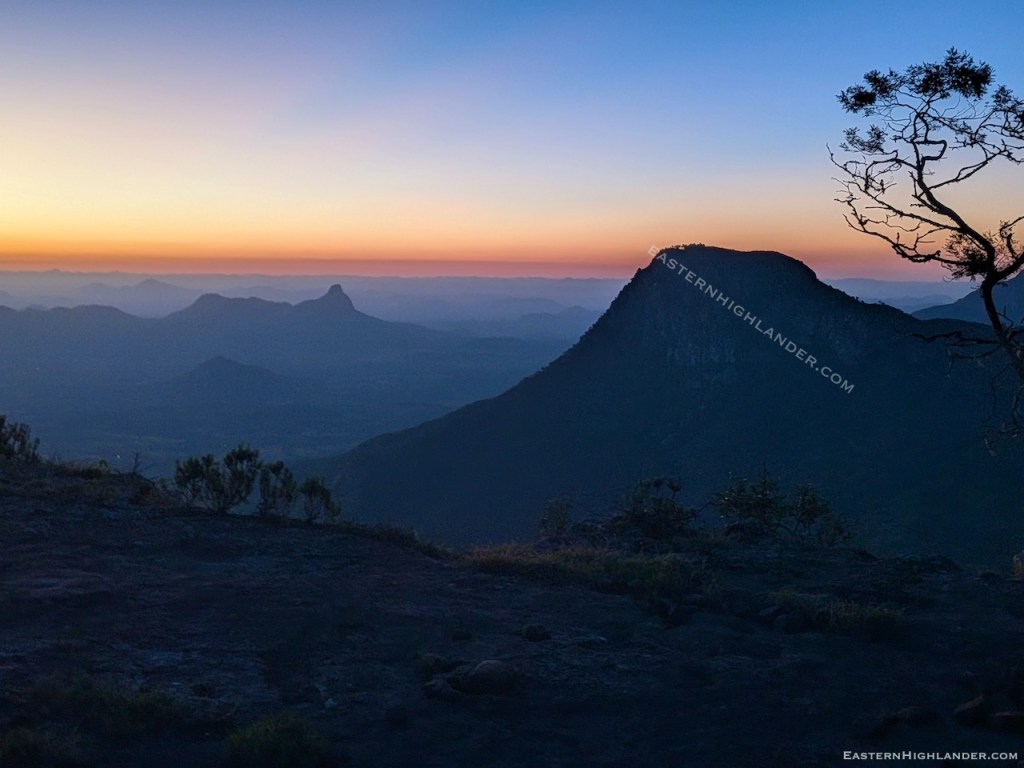
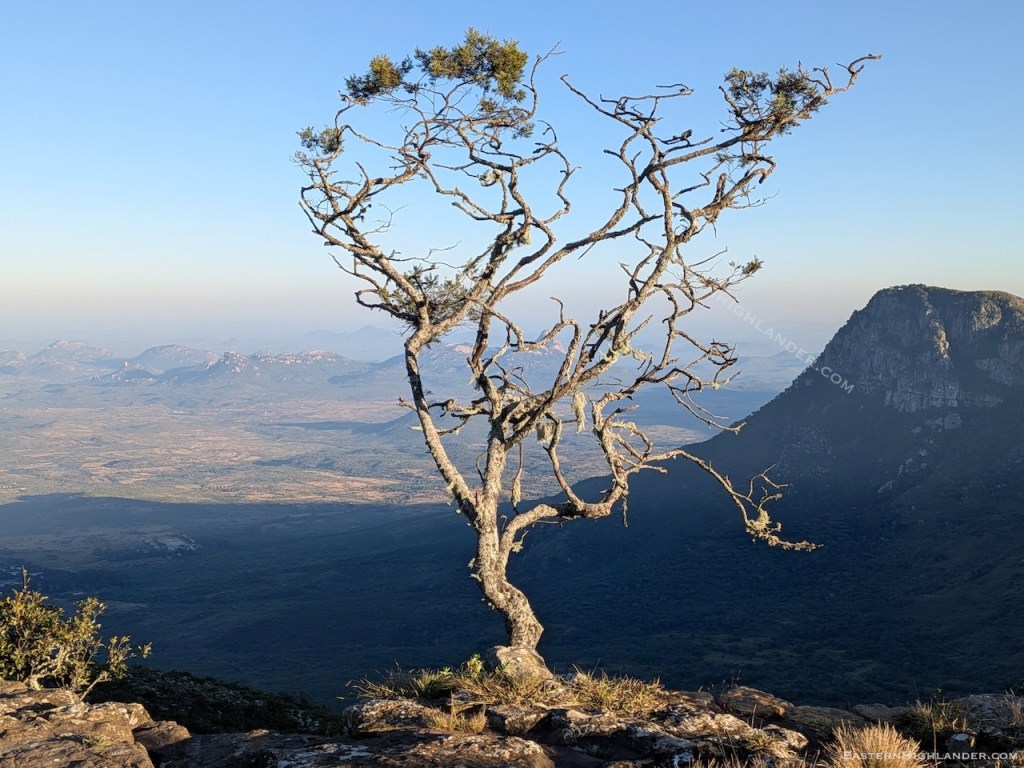
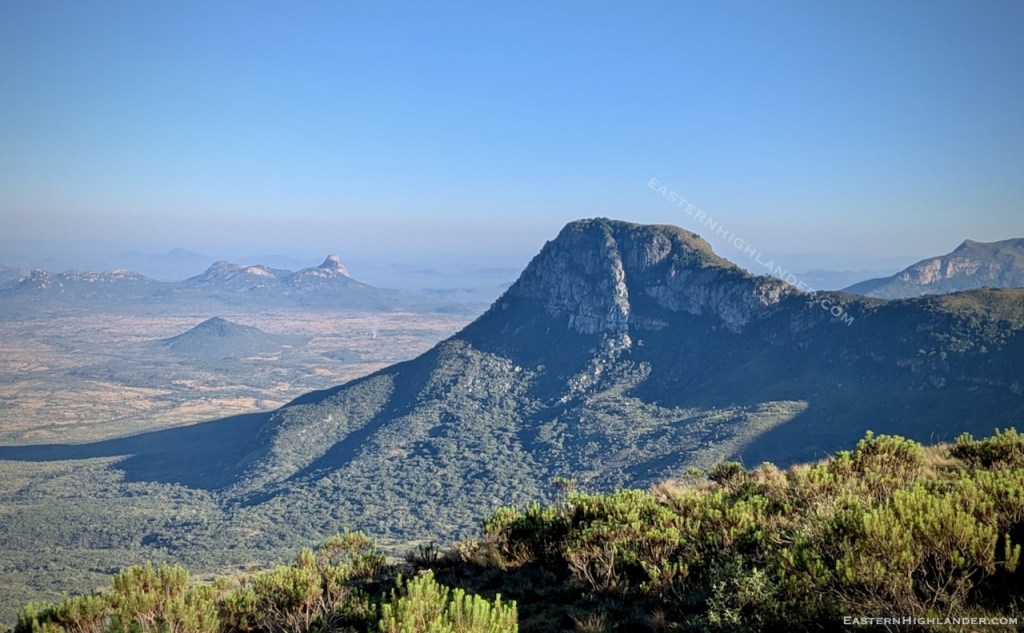
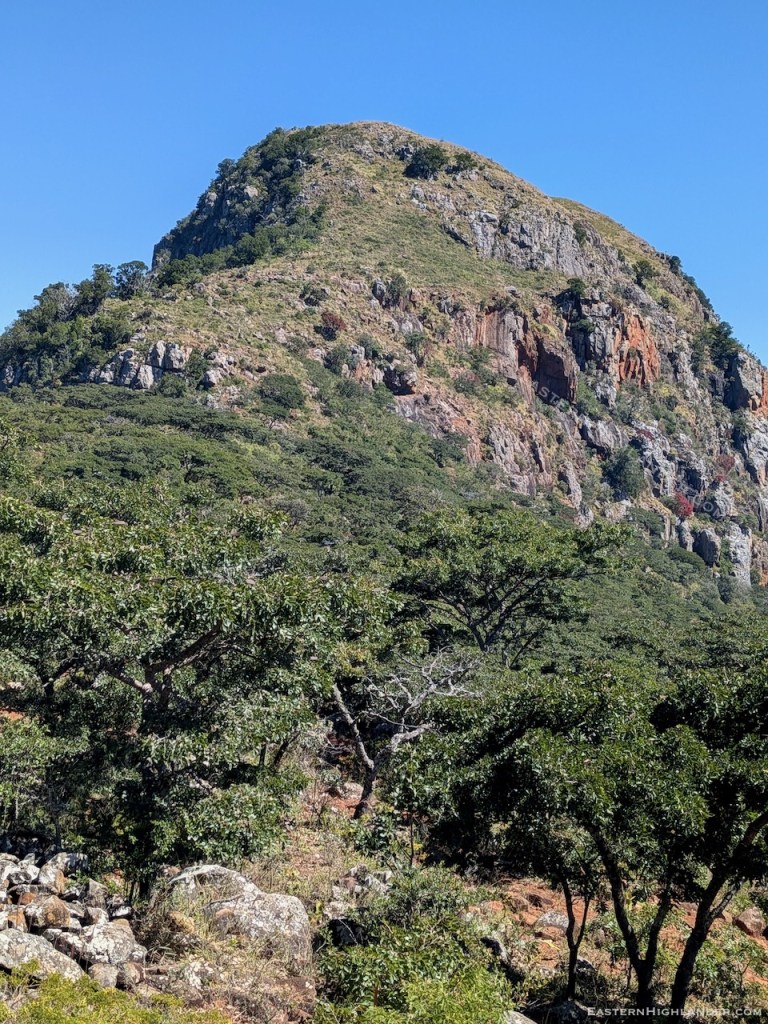
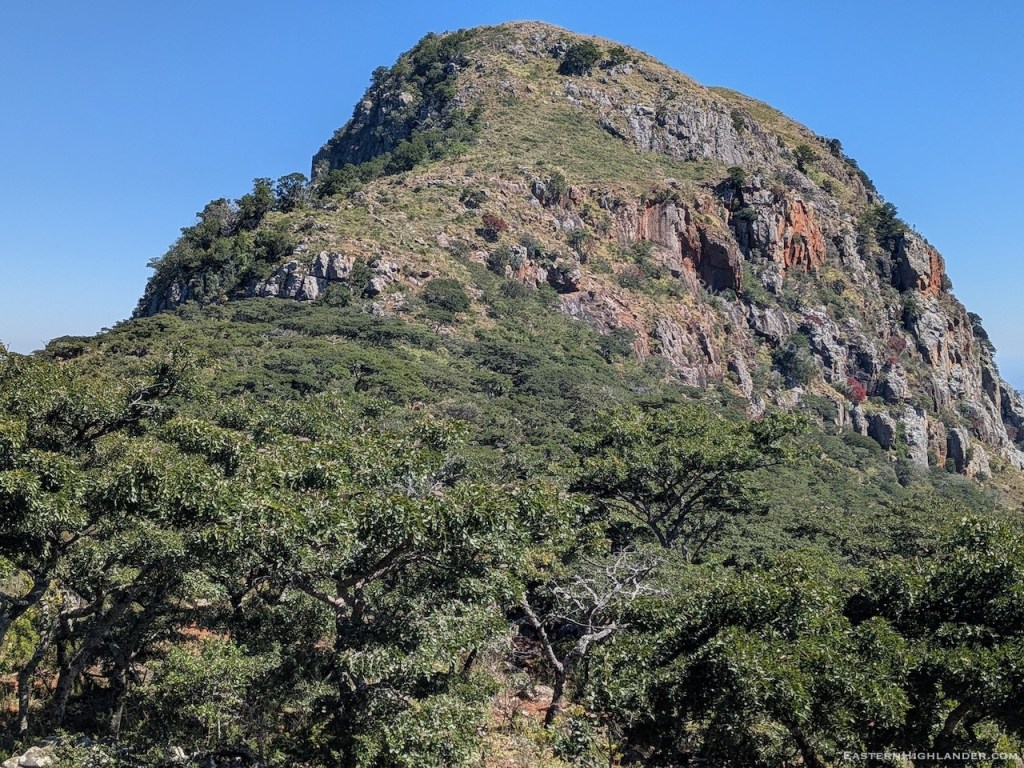
Nightfall on the escarpment Next morning – Muozi awaits Lanshan 2 picBest tree picMount Muozi now awake
The climb up was almost that, as I was more or less route finding the whole way using the semblance of previous tracks of animals or people, I had to put the trekking poles away to free up my hands; rests, mints and determination did the rest. Oh, and I had my pack the whole time so 15-16kg on my back. And one more thing, the incredible smell of faeces – monkey/baboon.
Long, long grass and brush on the top and uneven underfoot – some of it due to overgrown stone work probably. Unless it burns, in a year or two it may well be impenetrable.
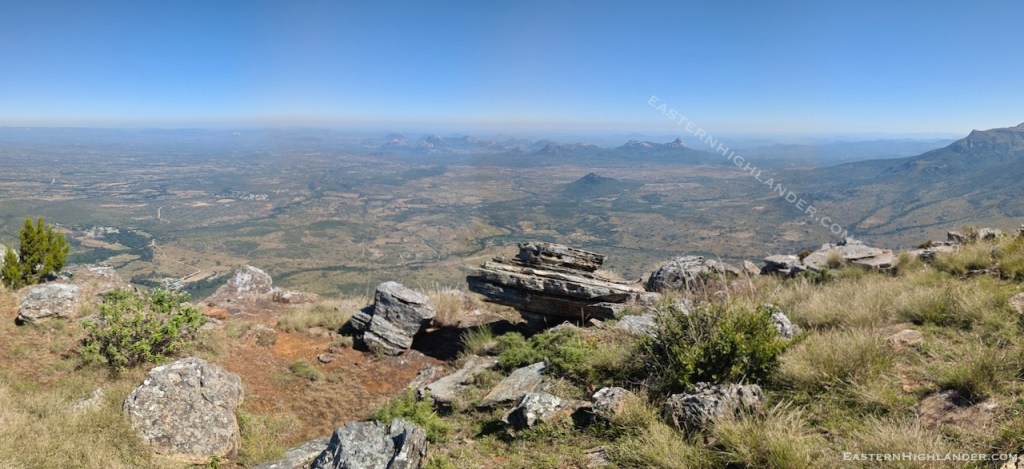
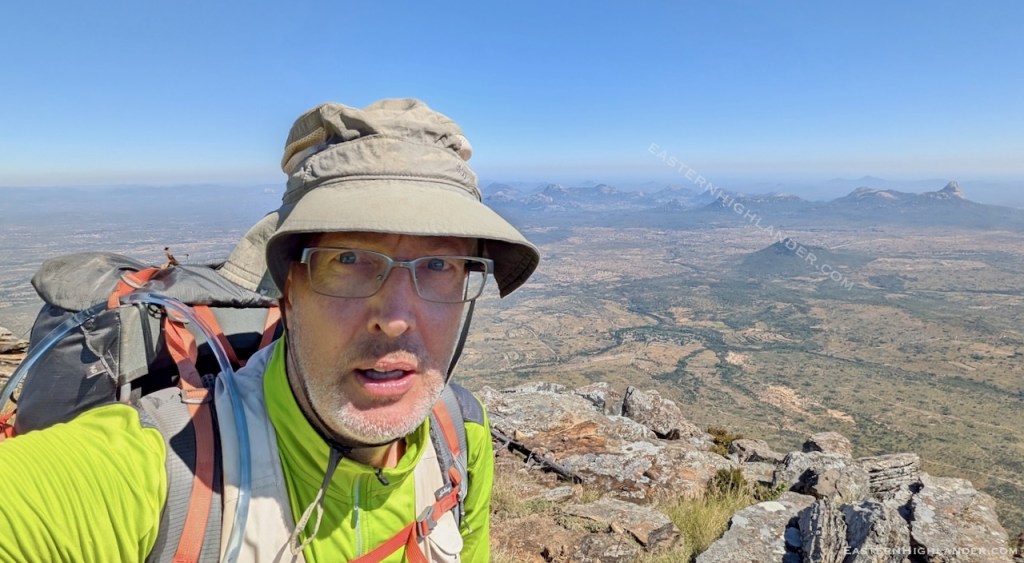
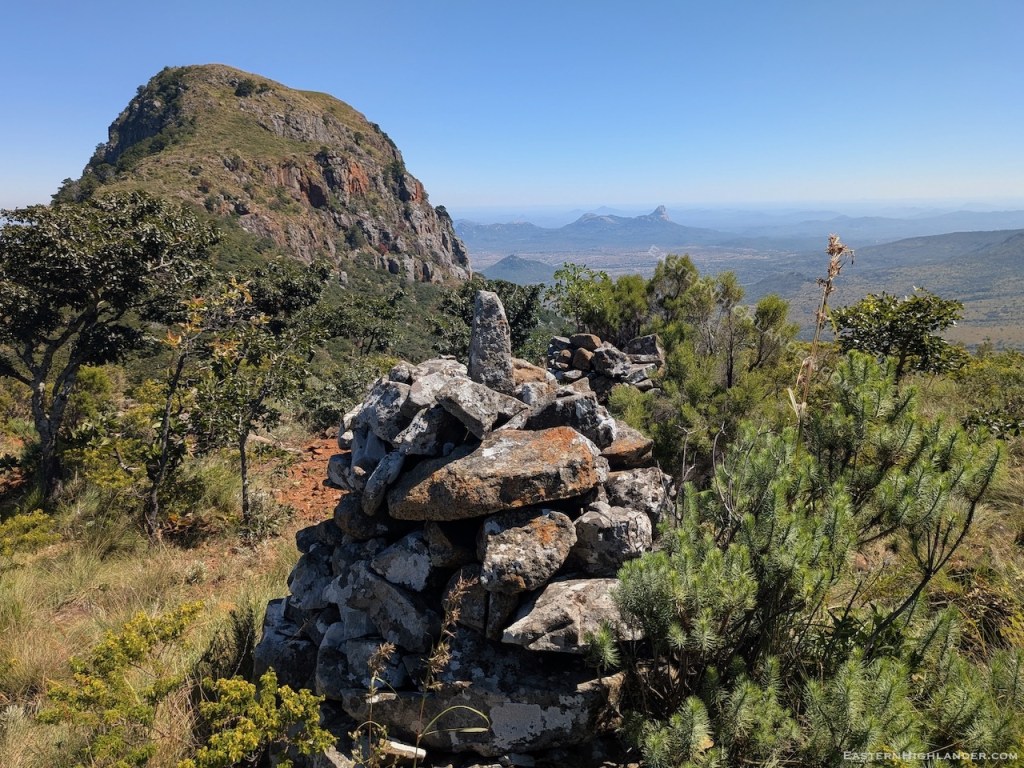
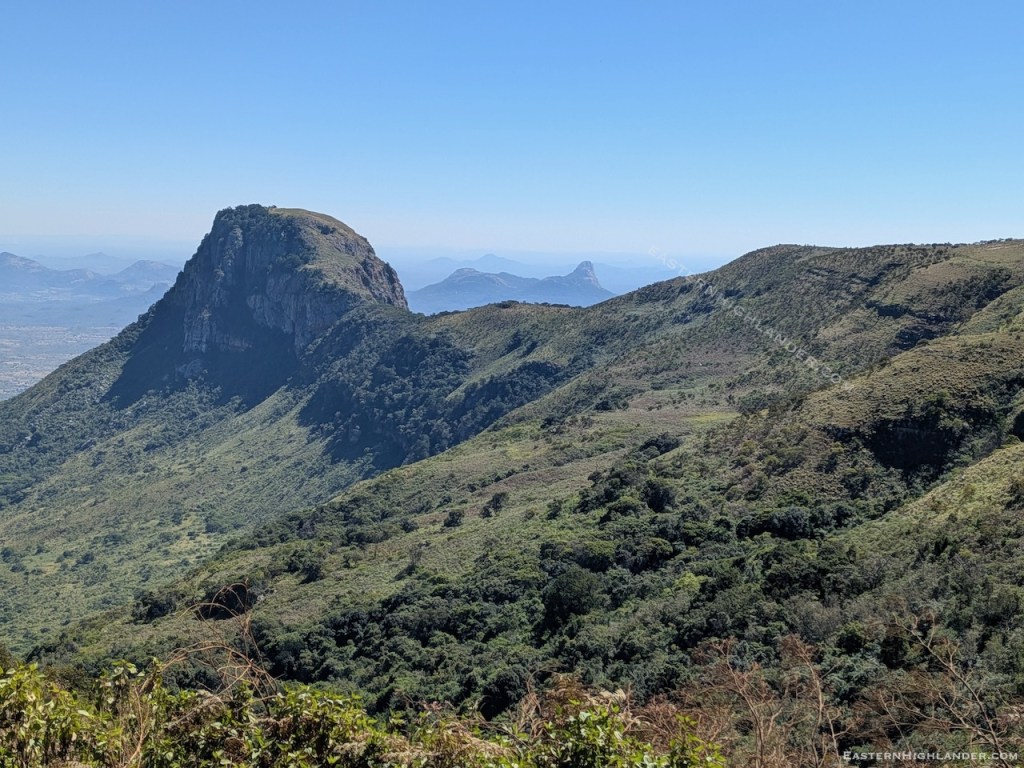
Suffering from the shock of actually making it I staggered westwards until the brush eventually gave way to rock underfoot. There was a dangerous looking cleft to the south with some description of pine trees growing out of it. Just beyond was the end of the plateau and photo time. It was a short stay on top as I was ‘keen’ to get on with the descent! However, however, there was a silver lining – by keeping to the south there was more of a route over the rocks and it was, unusually, easier than my incorrect way up – still too steep for the poles but more doable than my scramble.
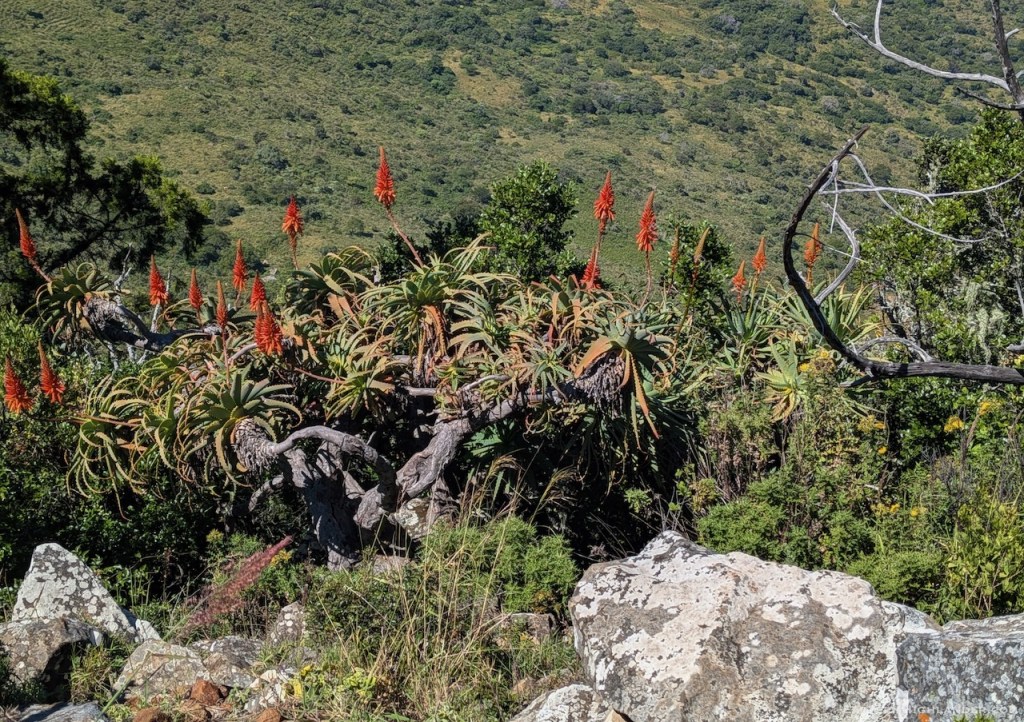
View from the top of Mount Muozi looking westwardsLooks like somethings is on his mindAloe arborescens on the way downBack on terra firma
Met a couple of chainsawers from Chimanimani working for Allied – they were waiting for their trucks and the log loader – and seemed pretty certain I would get a lift at the dirt road. After passing said trucks I walked on for a coupe of km and finished up level with my campsite, making it a round trip. Didn’t wait for long before I climbed up into the cab of a full truck going to the Allied / Chinese timber mill. There, security got me and older mudhara a lift on a full gonyet / artic / semi (an America Freightliner Columbia). Well, slow and steady wins the day – we averaged about 20 km/h for the next two hours to Bende Gap (1780m), down to Charamba (1320m) and on to Nyanga (1690m). Being left hand drive I was on the sunny side of the cab so I could see over the edge of the road on the way down and get cooked by the sun. I now know what a trailer brake is though! This driver was on the energy drinks as he was going to drive through the night to get this load to Harare.
That’s the story of Mount Muozi. No doubt much less stressful next time!