7 February 2024
Preface: I am ‘standing on the shoulders of giants’ from YouTube here, namely the ‘Long Suffering Hiker’ and his Improve a Lanshan 2 Backpacking Tent? Try these 13 modifications video!
I first, avidly, watched the above advice when in Scotland over Christmas then added some adjustments once the tent was in Zimbabwe, drying-off after each trip, below.

Number one, and a no-brainer for me, is a 4 metre guy from the top of the tent at each end of the ridge-line. This provides ‘essential Lanshan camping benefits’ as follows:
First, a shallow angle now exists between this new guy and the ridge-line so ‘better’ tension is easily obtained through the backbone of the tent without thrashing the manufacturer’s door-guy set-up which is already pulling at the wrong angle (a steeply downwards angle to the ridge-line) – thus providing improved wind holding in the north – south axis of the tent (when standing outside facing the doorway = north)
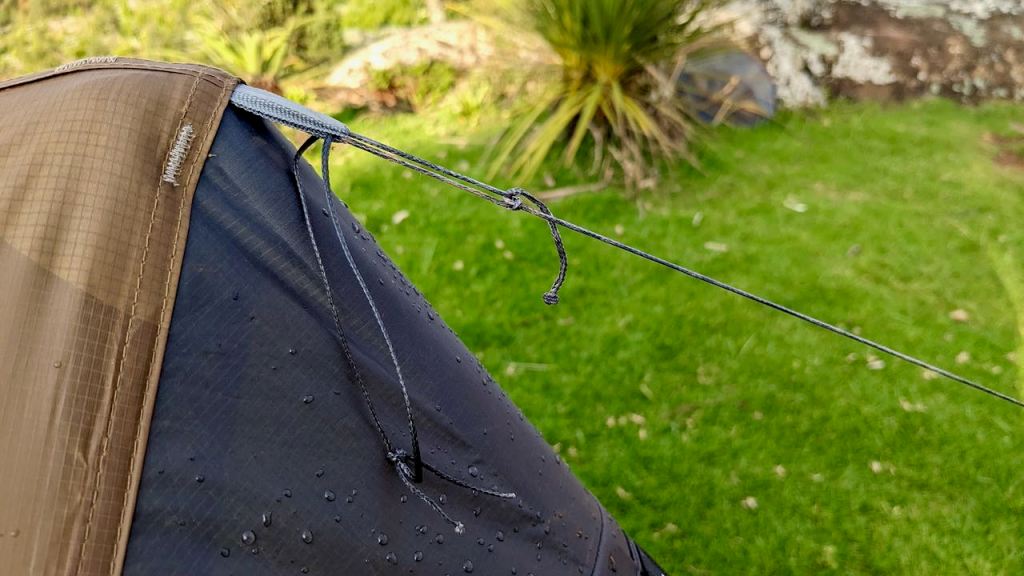
Second, a greater ability to find good ground for the extra tent peg required – or an alternate hold on something with in range. You can easily rack it in to a shorter length with the Line-Lok when in a tight spot. Add the tensioning Line-Lok loop at the bottom of the guy so you can loop it round a rock or what-have-you then tighten. I got this the wrong way round to start with.

Now, using the door-way and fiddling with / slackening the door-guy does not jeopardise the structure of the tent as you are using it. Warning: there is an ‘absolute risk’ of tripping over the longer guy line though! Shorten it when busy.
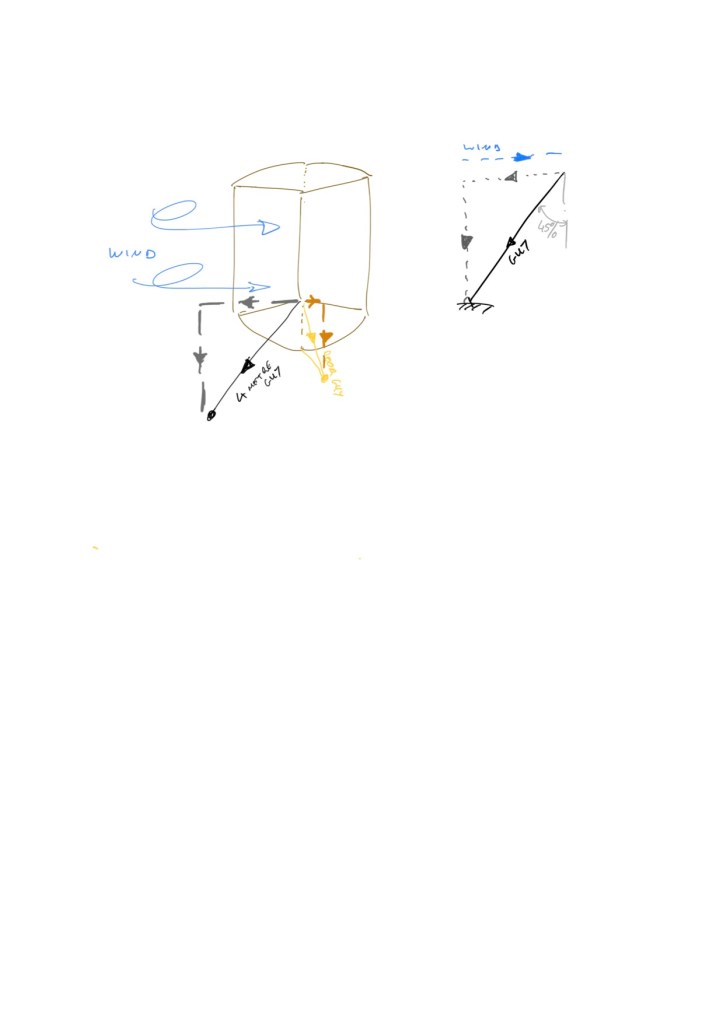
Third, in really high or variable winds you can peg this 4 metre long guy at an angle out from the centre line e.g. south west, and re-position the door-guy slightly south east, ending up with anything from 45 to 90 degrees between the two guys (although different lengths). This gives the tent much more firmness side to side (east to west) e.g. when you try and shake it at the top of the trekking pole support point. Pegging out the door-guy at an angle does make one of the doors, the entry door, flappier (they are of course already flappy) but you can lessen the angle of this guy compared to the 4m one and still gain east – west stability.
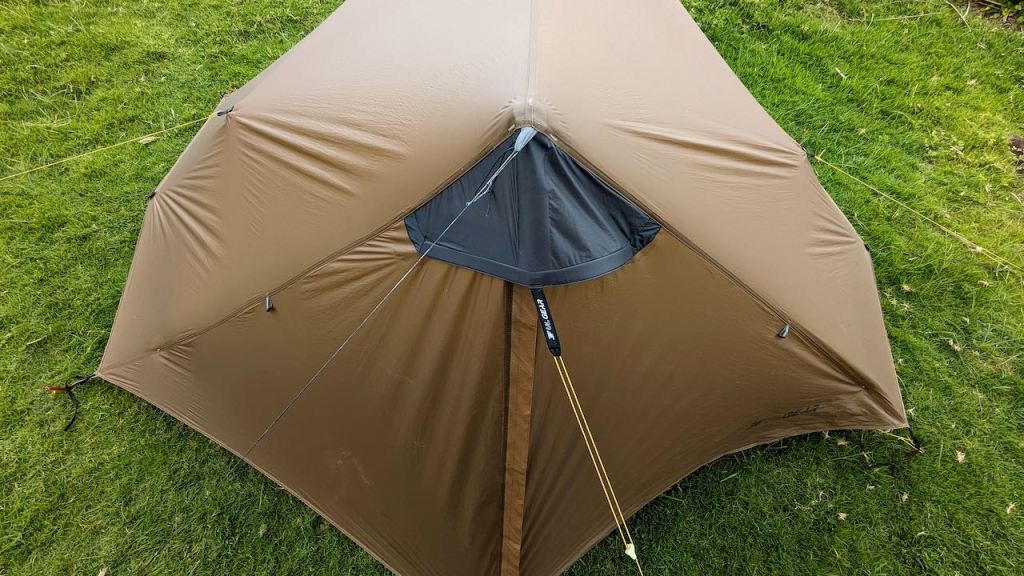
(If the 4 metre guy was pegged out at 45 degrees then half of the tension in this line would be acting against wind coming from the same side. And, if its angle was shallower, a smaller proportion of the yellow, door-guy tension would resist wind coming from the other side. Now the tent is not relying solely on the four corner pegs to resist side winds so we have a stronger set up. See sketch at the very bottom.)
Extra weight = 2 x {4 m of 3 mm dyneema + Line-Lok + peg} e.g. 30 – 40 g
Number two, optional, is to add tension to the base of the side panels – benefits and downsides as follows:
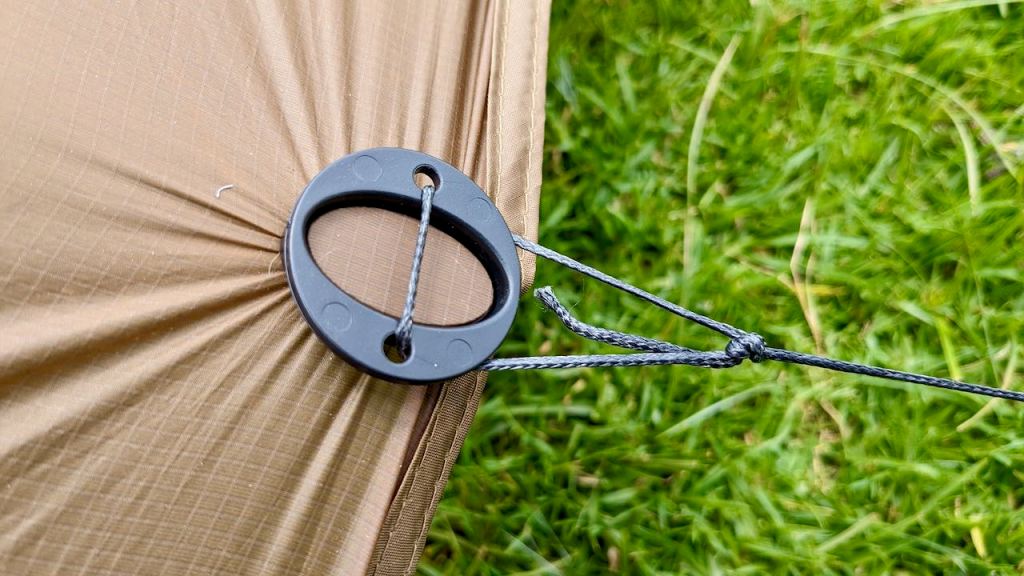
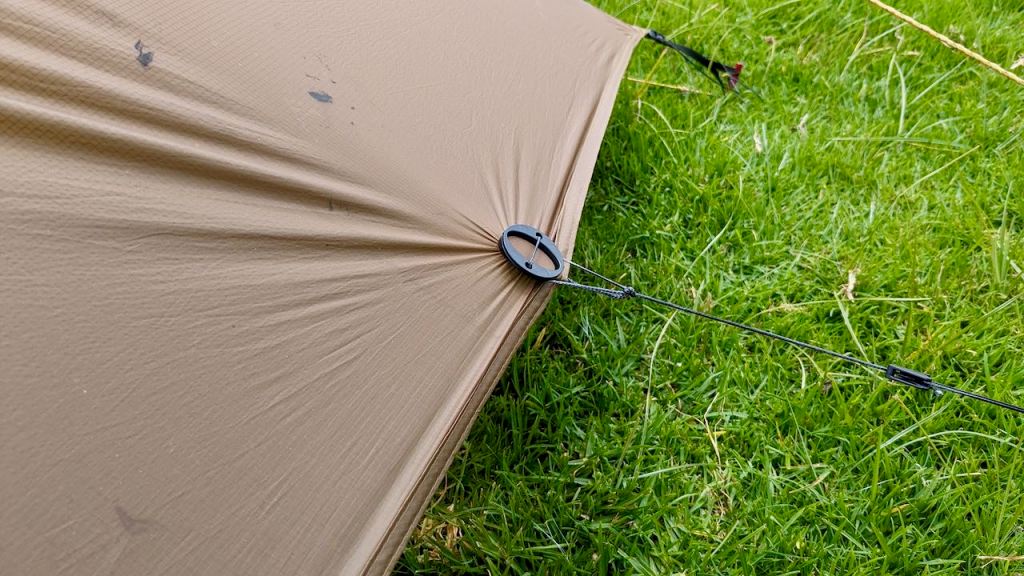

First, this lessens the impact of the whole side panel of the flysheet ‘breathing’ up and down, caused by passing wind. Now, small sections between the newly created ‘vertical’ mid-line ridge and the ‘corner’ point breath or flutter but the effect is reduced;
Second, this increases the distance between the inner and the fly at the bottom of the tent to reduce, but not eliminate, the chance of the inner touching the fly;

With ‘new, extra, added’ tension the fly side panel is further away from the edge of the inner tent:
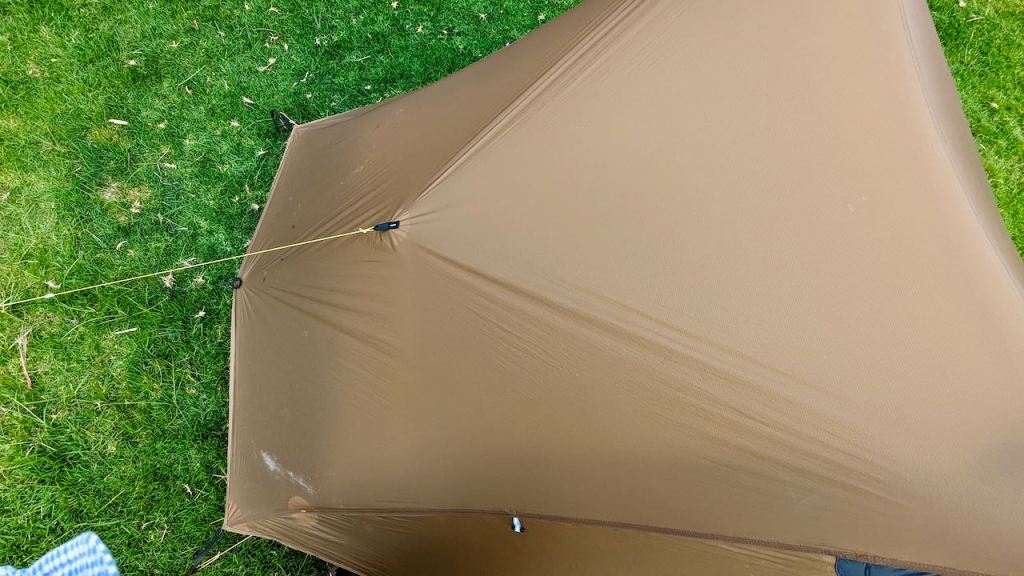
Third, this creates a vertical ridge from the original centre guy point down the new holding point. This now, just about, creates three planes (see above) out of the single original side panel (OK – it was flattish with a spike at the original central guying point) which MAY help wind shedding a la X-mid etc, but we’d need the wind tunnel …
Back to reality: after adding the Grip-clip and tightening the new guy there is some extra tension directed through the bottom of each door panel – this could either be an advantage in reducing the door flapping, or a disadvantage as too much tension?
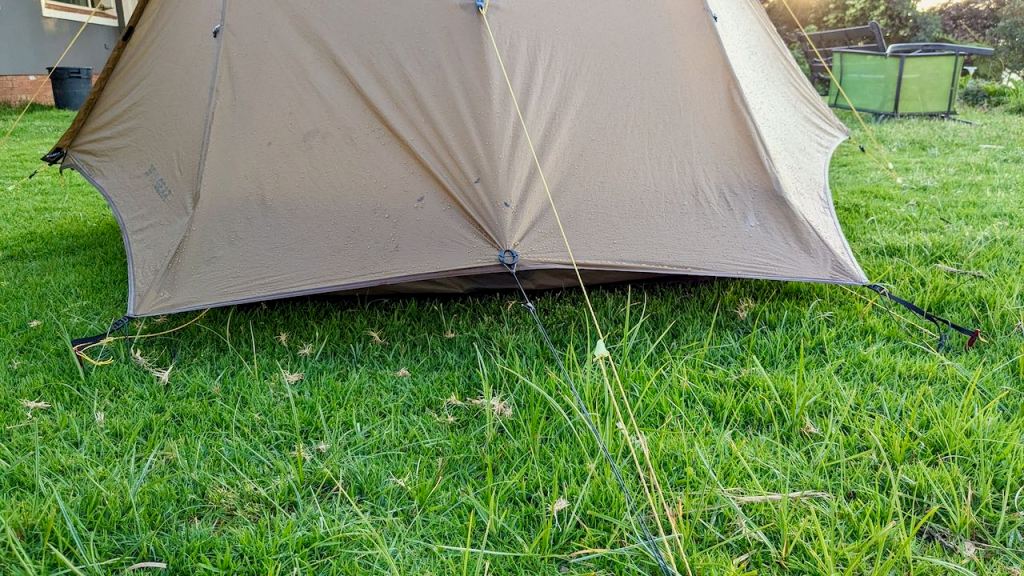
An obvious downside is that the new attachment point and tension now raises the bottom of the side panel of the tent somewhat further above the ground. My head or feet or the mattress / sleeping form sliding down and bumping against the inner is the greater problem for me at the moment so I’ll live with it.
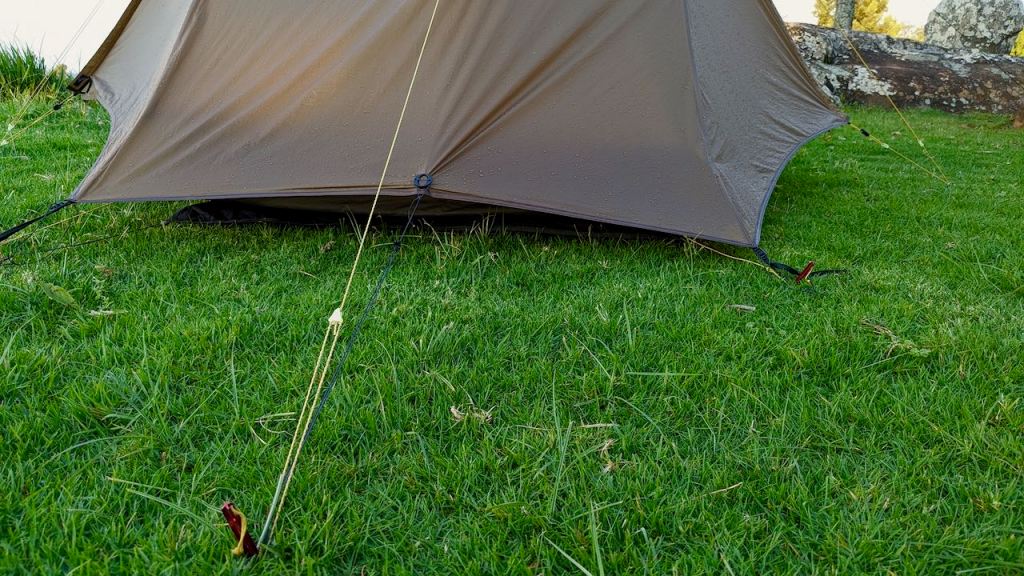
Extra weight = 2 x {1.5 m of 3 mm dyneema + CLIP} e.g. +15 g (no extra peg needed)
Number three(s):
At the four corners of the flysheet the loop hole of the tensioner strapping (webbing) is very small and so, after my recent camp on the sawdust mound below, I added larger safety loops to the bottom corners of the fly so that I could hammer through a medium size stick to hold it if necessary. Without this firm hold on the flysheet you suddenly understand that the tent is not going to stand up properly when tensioned – hence these loops provide me with some insurance!
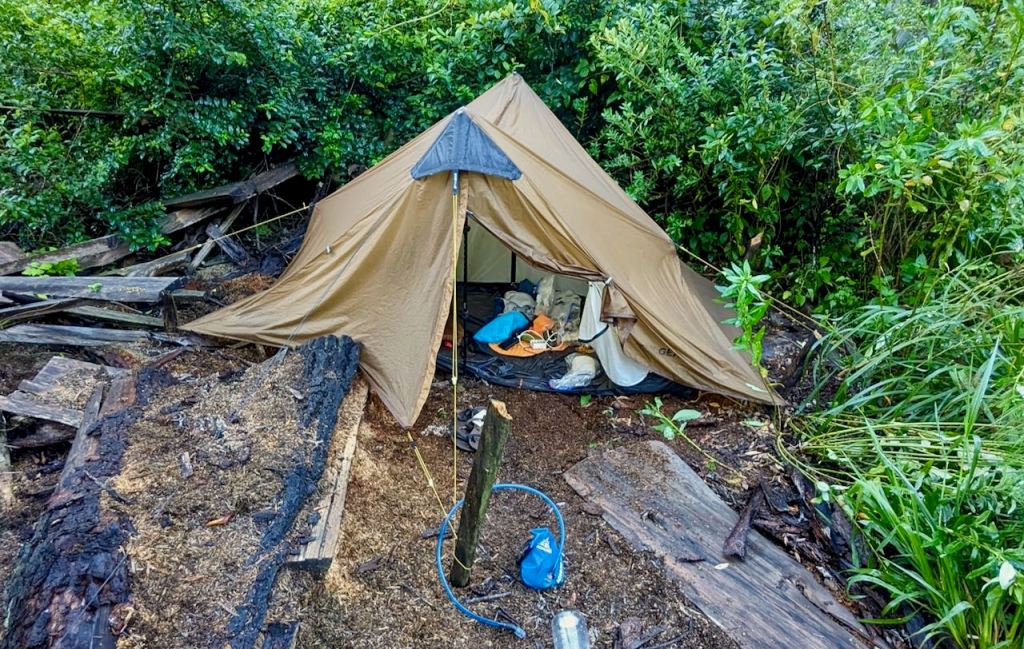
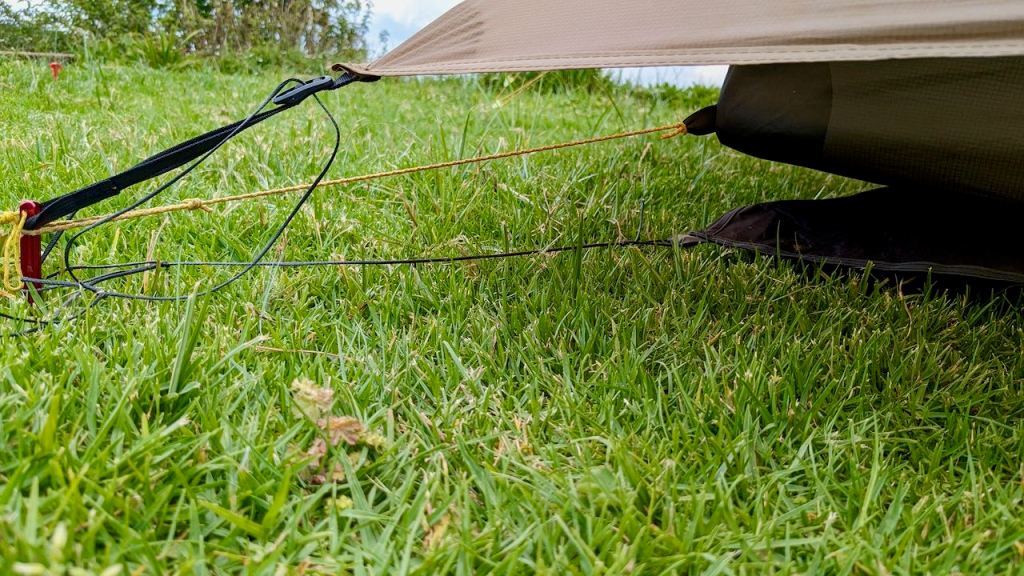
Add a couple of loops, about 3m, of dyneema inside, between the roof hooks, for your ‘washing line’ and it will be your emergency / extra guy line one day.
Number three (if it counts) adjust or add ties to the corners of the ground sheet and the inner so that they match the fly and can all work off the same peg.
Add a safety loop at the top most guy point. See second picture – top. When you need it you will be in a hurry, and the manufacturers loop will already be under tension from your 4 metre guy line, so you may struggle to thread your additional / emergency guy – especially as it will now be cold, dark and the wind howling. Oh, and it will be raining.
Minimal weight of dyneema required for these e.g. 20g
Per the recommendations online:
I added clips to the top of the tent inner for flexibility and easy un-attachment (because the fly is soaking wet in the morning).
Through the four corner seams of the inner I threaded lengths of dyneema – not elastic – and added a plastic-pincher-thing – to add some ‘up-down’ tension. The general flappiness of the inner under the side panel remains a positive disincentive for wet weather. Which now brings me onto ‘sagging’.


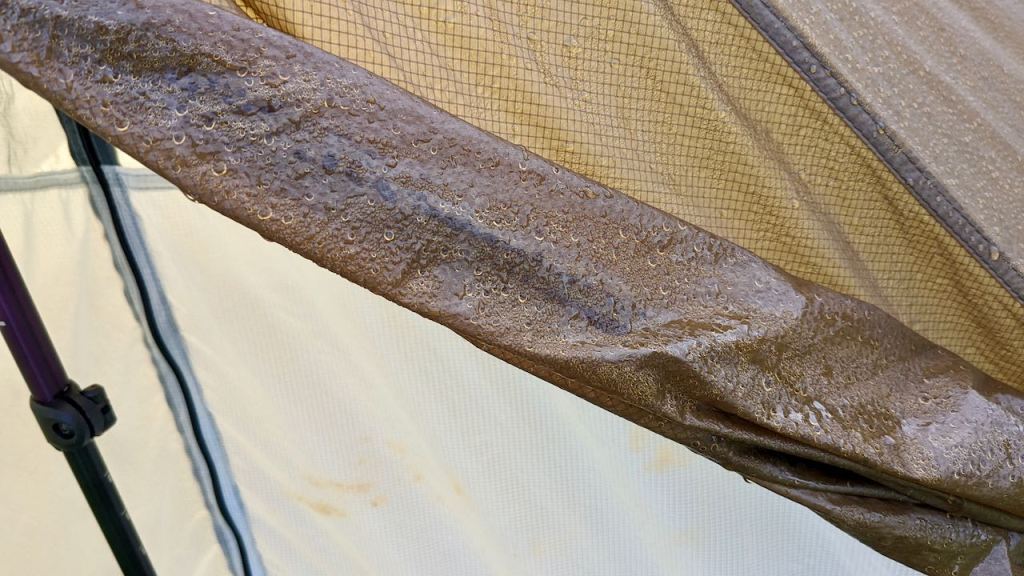
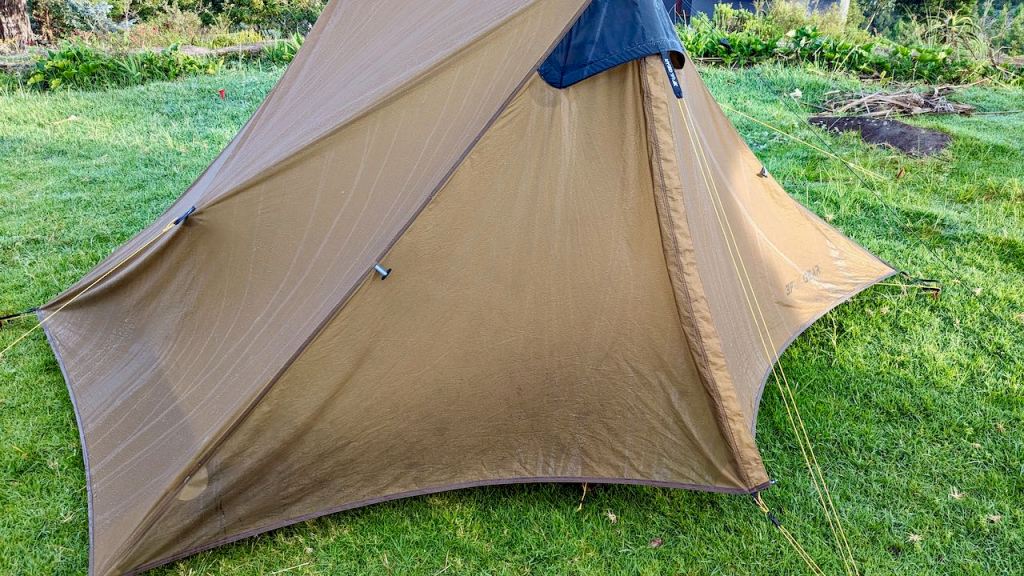
There is no getting round it, when wet, from rain, or from my heavy-dew-condensation combo (i.e. every morning for me at the moment, with +50% humidity in the day-time and higher overnight – I left the tent up overnight at the house to test the inner condensation inside the fly), this whole thing is going to droop and wilt dramatically! And, possibly, lead to unwanted touching, of the inner and fly, and then, possibly, leakage – meaning some water in the tent. I understand it comes with the territory using this lightweight material and for £150 I’m not complaining too much!
Witness:
Happy tent erecting.
Zimbabwe out /.
No trigonometry please we’re camping!
 Eastern Highlander